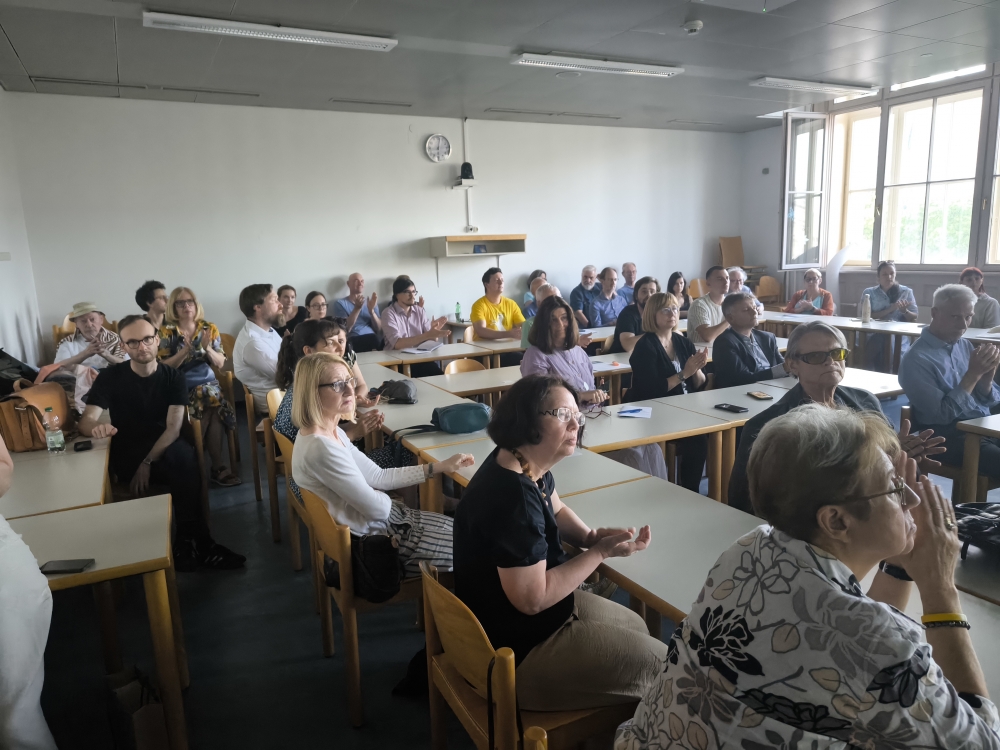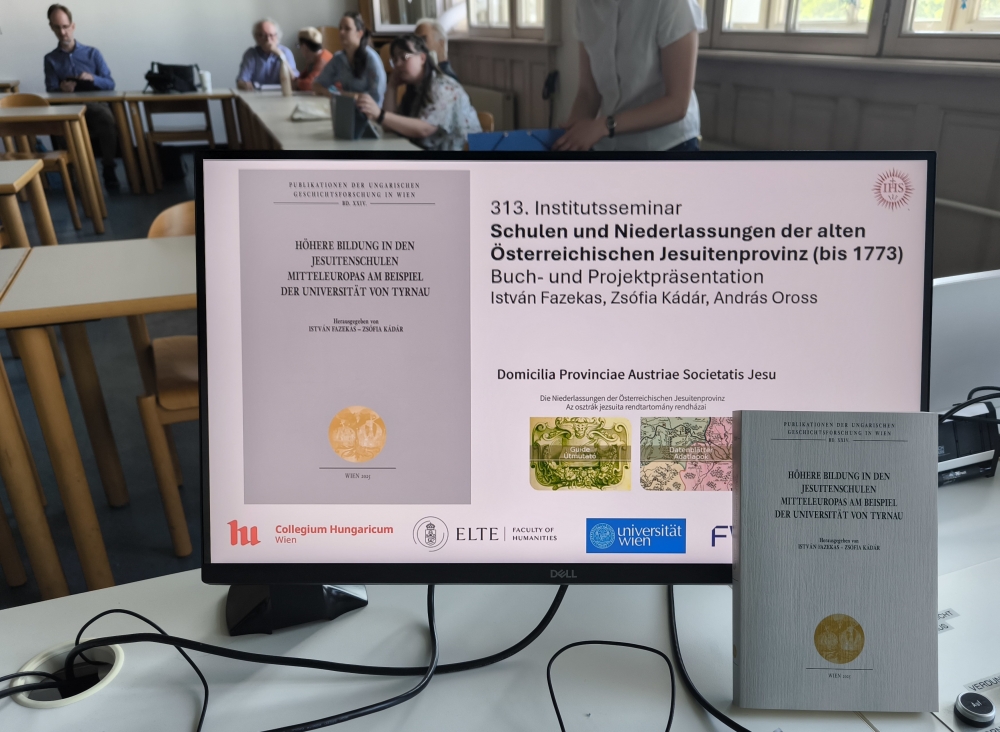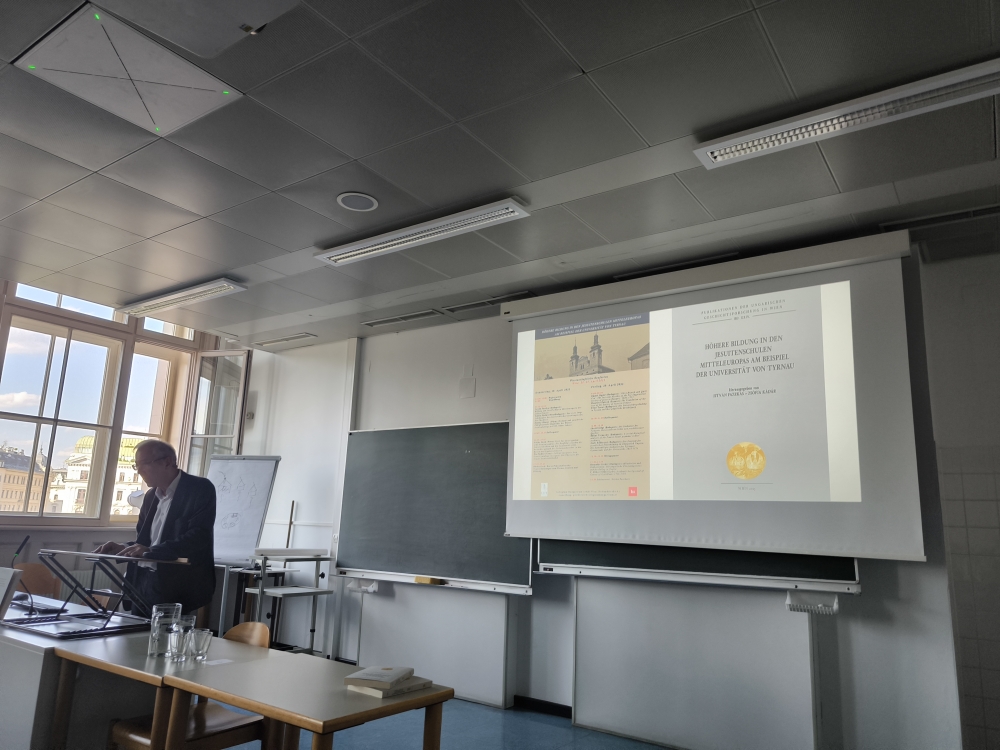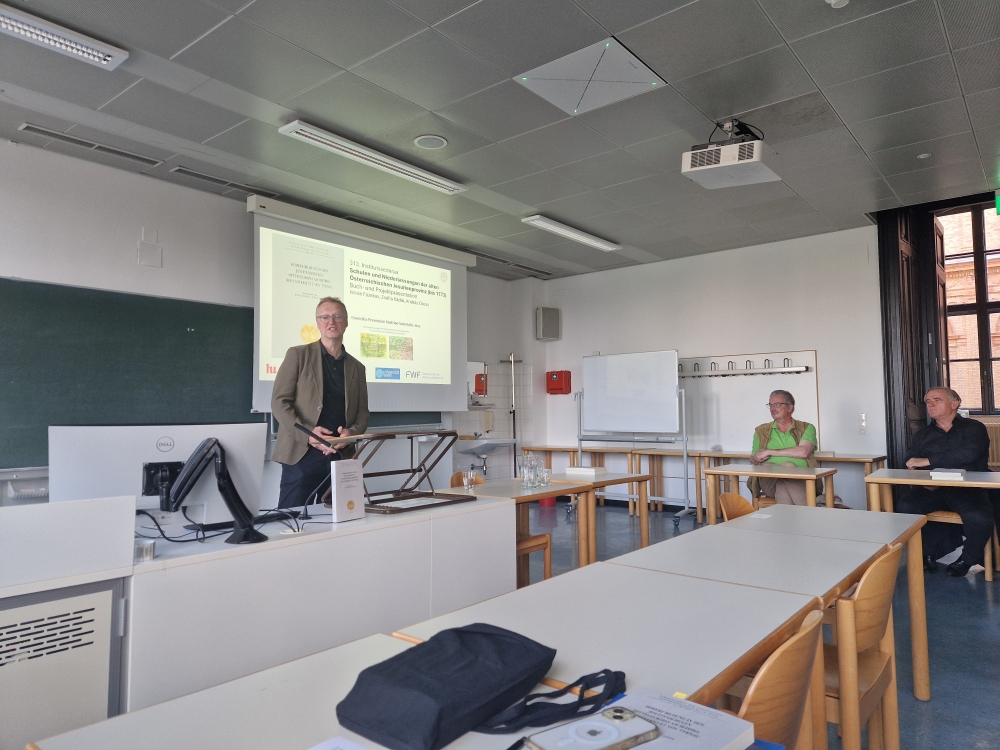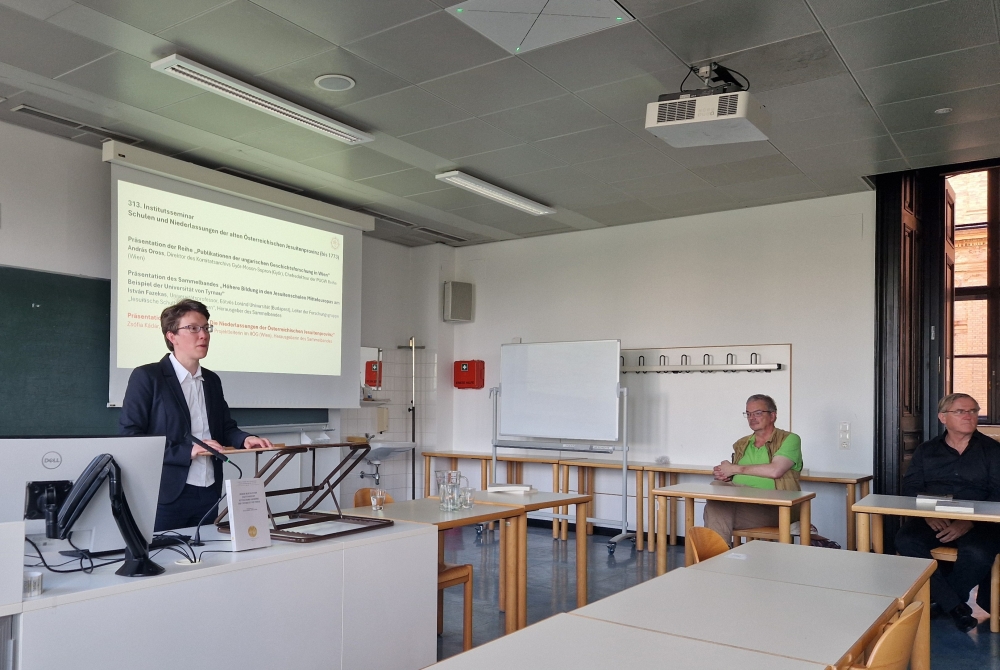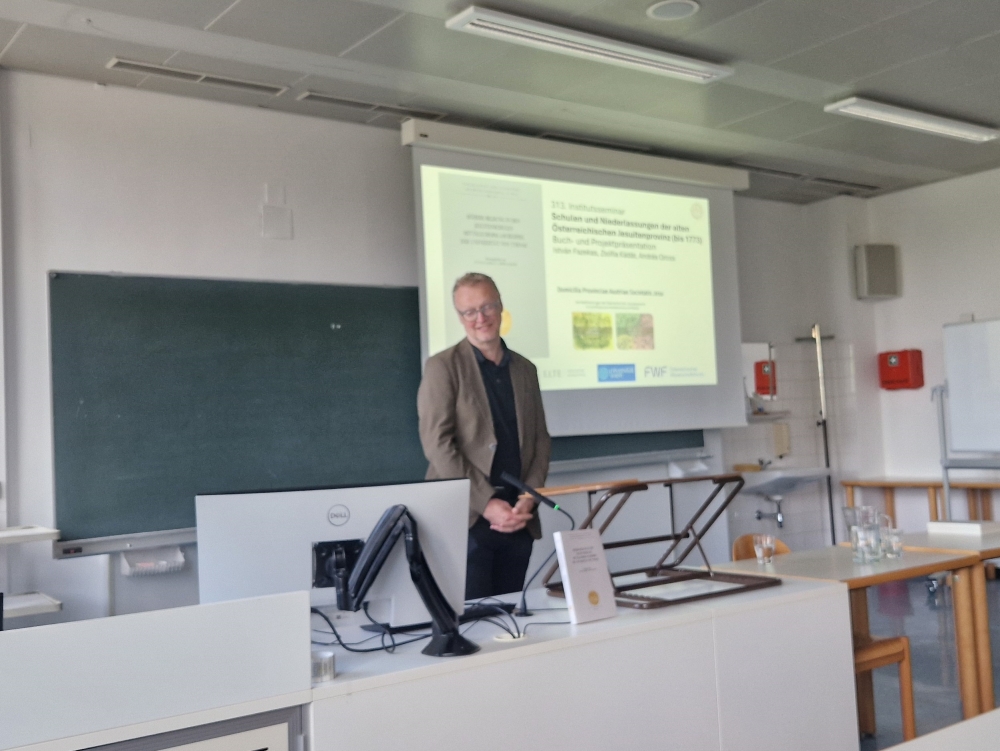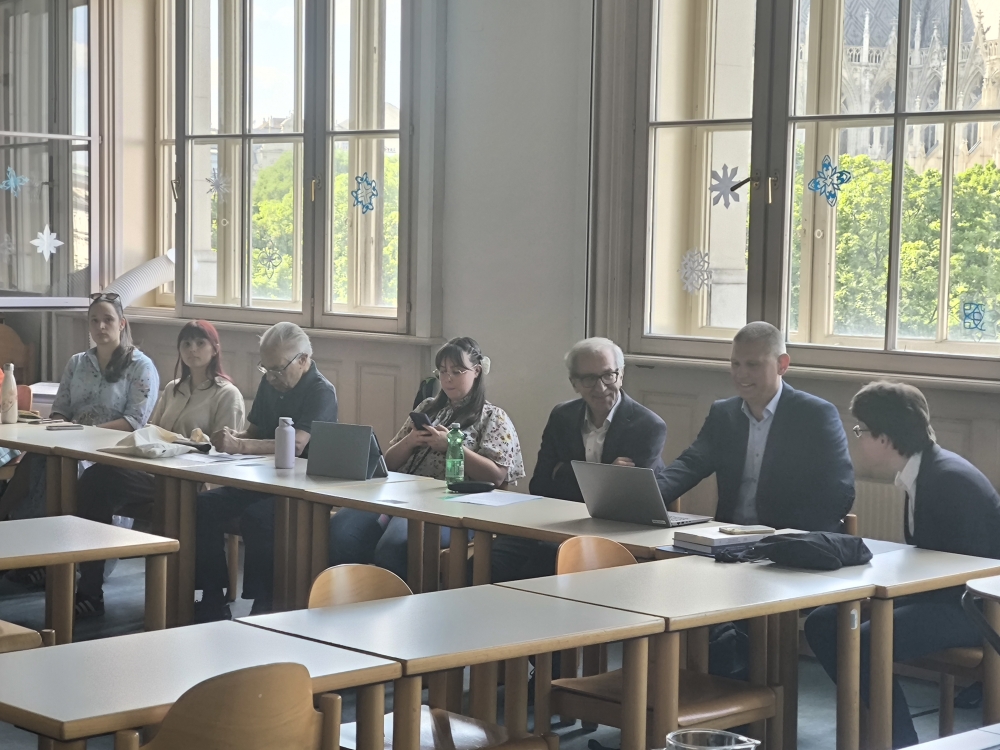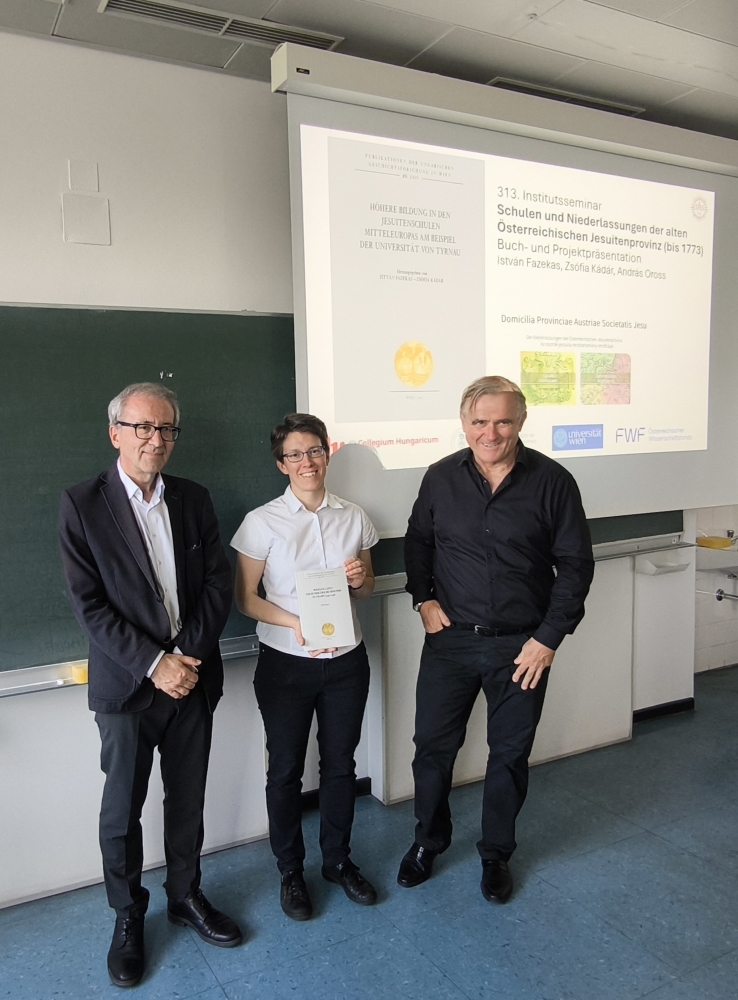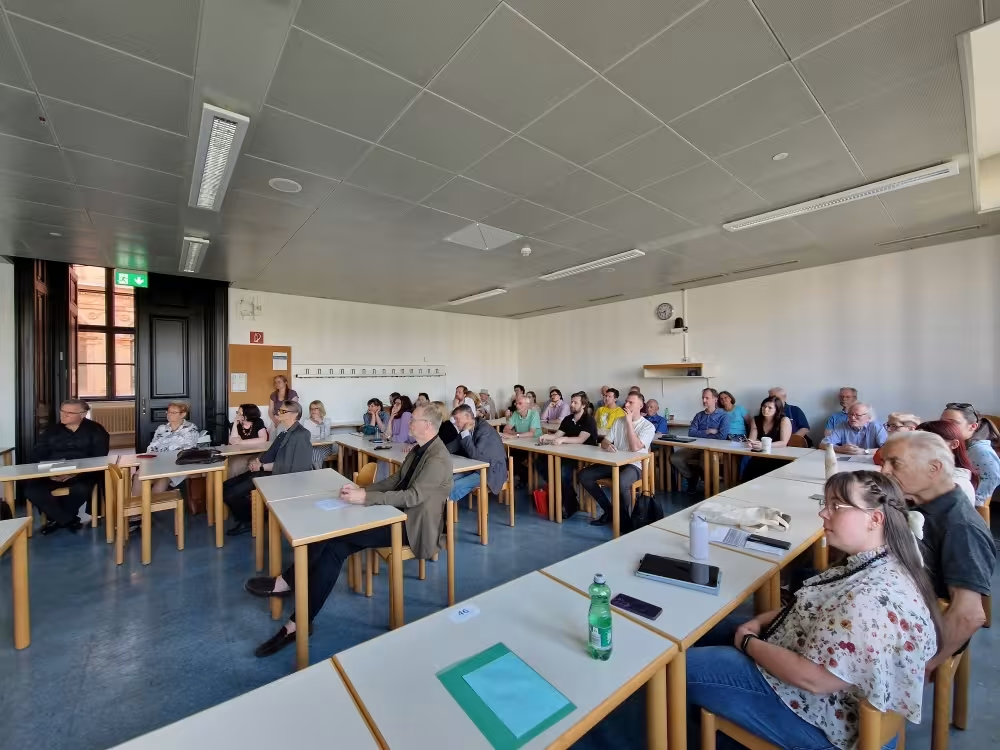
On 8 June 2026, the latest research findings on the schools and religious houses of the former Austrian Jesuit Province were presented at the seminar of the Institute for Austrian Historical Research (Institutsseminar des Instituts für Österreichische Geschichtsforschung) at the University of Vienna, in the form of a combined book and project presentation.
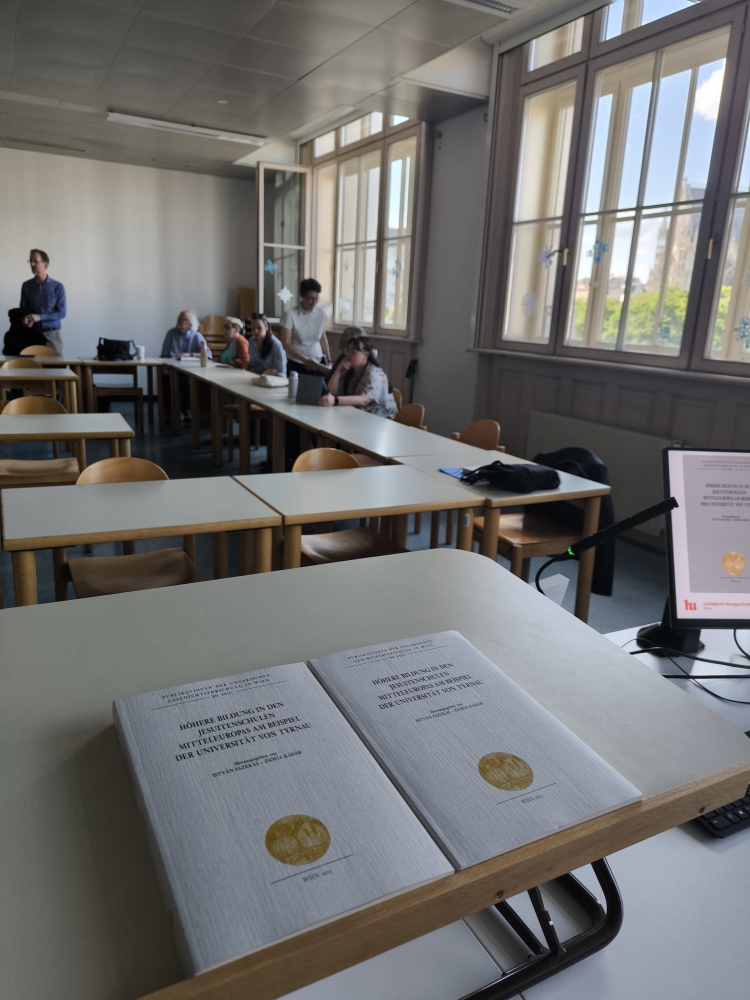
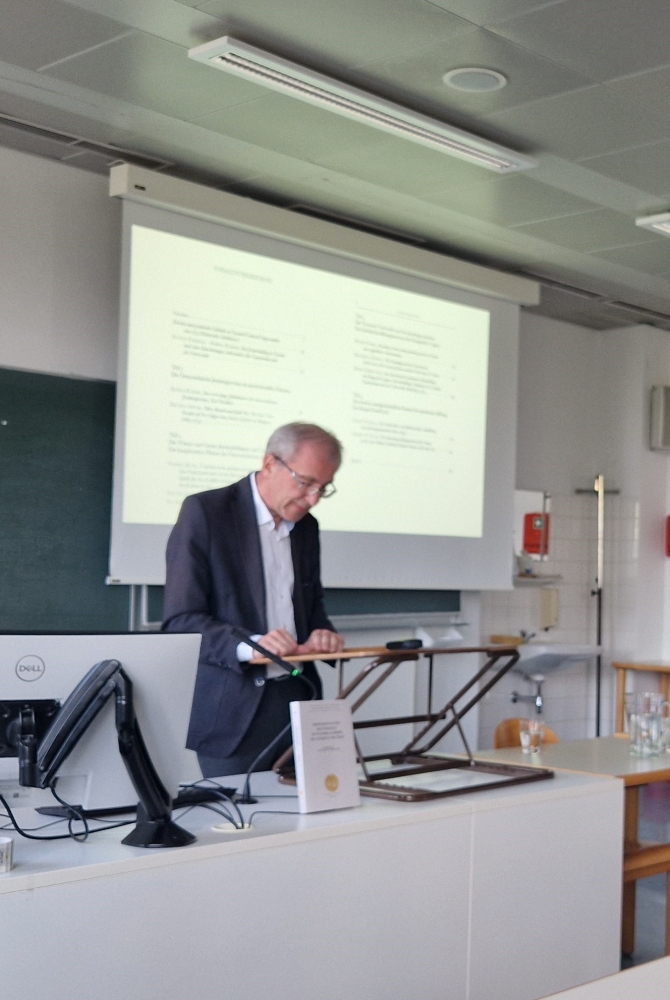
As part of the event, editor István Fazekas introduced the volume Höhere Bildung in den Jesuitenschulen Mitteleuropas am Beispiel der Universität von Tyrnau (PUGW XXIV, Vienna, 2025). The collection includes contributions by two members of the Fraknói Research Group, Péter Tusor and Róbert Oláh P., entitled “Pázmánys Universitätsgründung und das Problem ihrer päpstlichen Anerkennung” (pp. 155–170) and “The Educational Background of the Canons of the Győr (Raab) Cathedral Chapter between 1658 and 1783” (pp. 245–261), respectively. The volume explores the history of Jesuit secondary and higher education, with particular emphasis on the University of Trnava (Nagyszombat) and its wider educational network. Through contributions published in both English and German, it seeks to situate the history of Jesuit institutions within broader Central European and Habsburg-monarchical contexts.
The second presentation was delivered by Zsófia Kádár, who introduced the database Religious Houses of the Austrian Jesuit Province. Developed within a postdoctoral research project conducted at the Institute for Austrian Historical Research since 2021, this ambitious online resource provides structured descriptions of approximately thirty religious houses belonging to the former province and is intended to serve as a foundation for future scholarship.
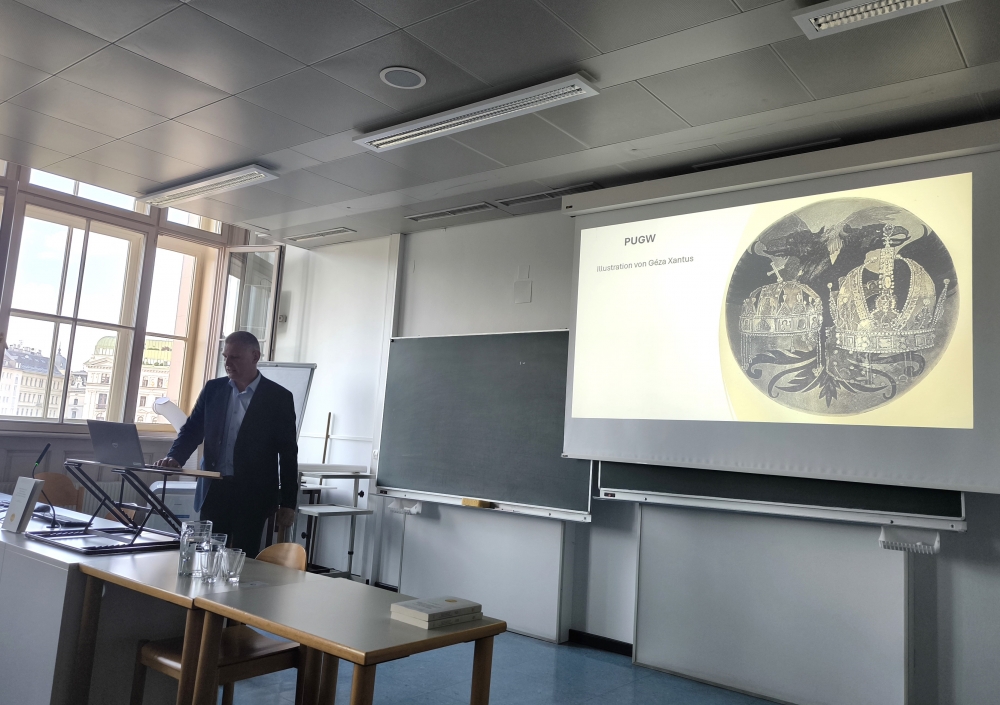
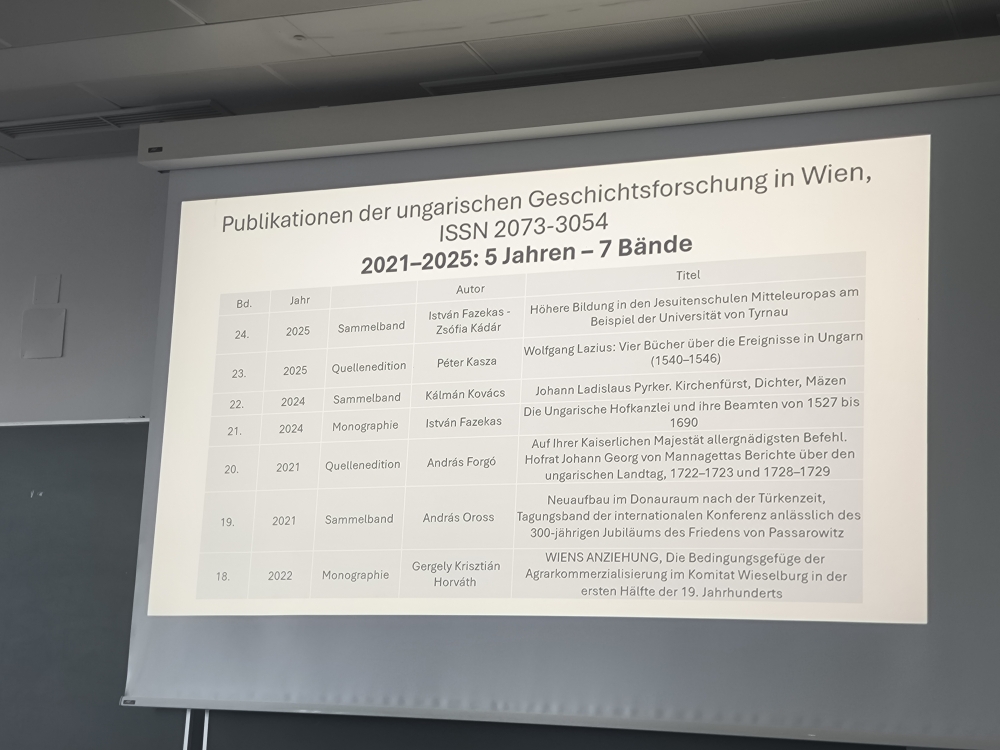
In the introductory part of the programme, András Oross, Editor-in-Chief of the series, presented the aims and achievements of the Publikationen der ungarischen Geschichtsforschung in Wien (PUGW), the principal publication series of “Hungarian historical research in Vienna” — or, equally, “Viennese Hungarian historical scholarship.” The deliberately ambiguous German title reflects the fact that the series publishes, in considerable numbers, studies of international significance that are not necessarily based on research conducted in Vienna itself.
Oross also discussed and analysed the series’ emblematic illustration, created by Géza Xantus in the artist’s home at Csíksomlyó (Transylvania). (Xantus was likewise responsible in Rome for the copper engraving that later served as the basis of the Collectanea Vaticana Hungariae emblem.) The image depicts not only the Hungarian royal and Austrian imperial crowns, but also a Hungarian turul soaring behind the double-headed eagle.
The Viennese series of Hungarian historical scholarship was founded in 2009 on the intellectual and typographical foundations developed for the Collectanea Vaticana Hungariae, through the initiative and organisational efforts of István Fazekas and Péter Tusor. The Viennese sister series of the Roman-based CVH was formally introduced in Hungary in 2018. One of its most significant volumes was presented in the spring of 2024 at the Hungarian Embassy in Vienna, housed in the former palace of the Hungarian Court Chancellery. (For further information on the relationship between the CVH and the PUGW series, see our news reports from 2018 and 2024.)
From its foundation until 2022, the PUGW lacked a dedicated series editor. Thanks to the efforts of András Oross, however, this important international forum of Hungarian historical scholarship has gained renewed momentum over the past four years. Its presentation at the University of Vienna, within the prestigious seminar framework of the Institute for Austrian Historical Research, offered compelling evidence of this continued vitality.
The Fraknói Research Group was represented at the event by Péter Tusor, one of the founding members of the PUGW editorial board.