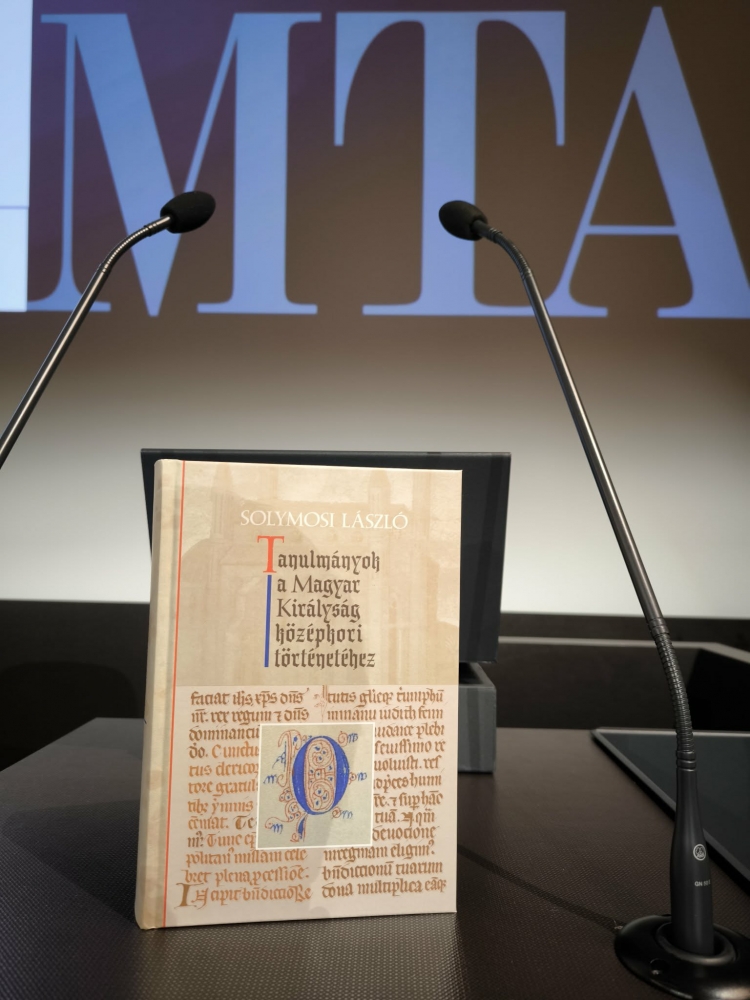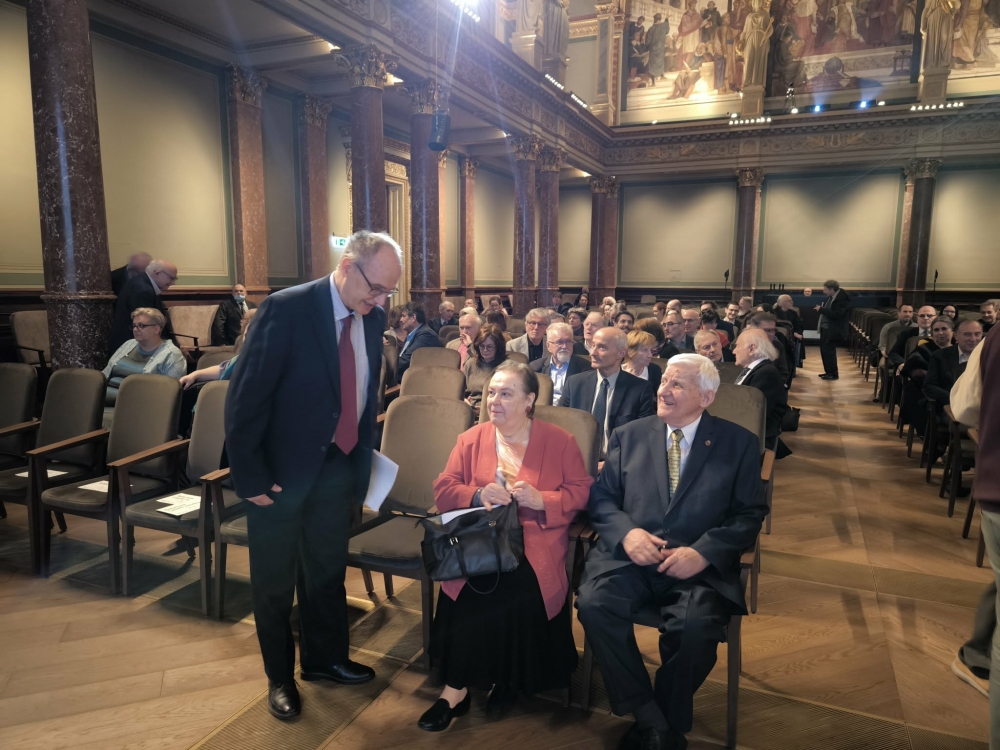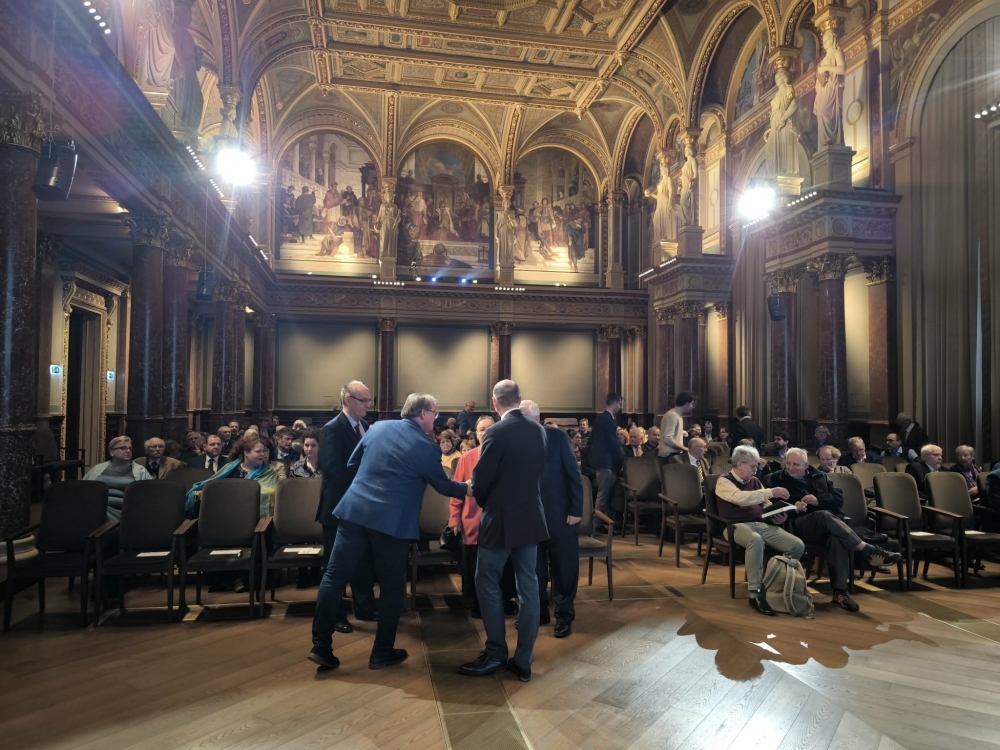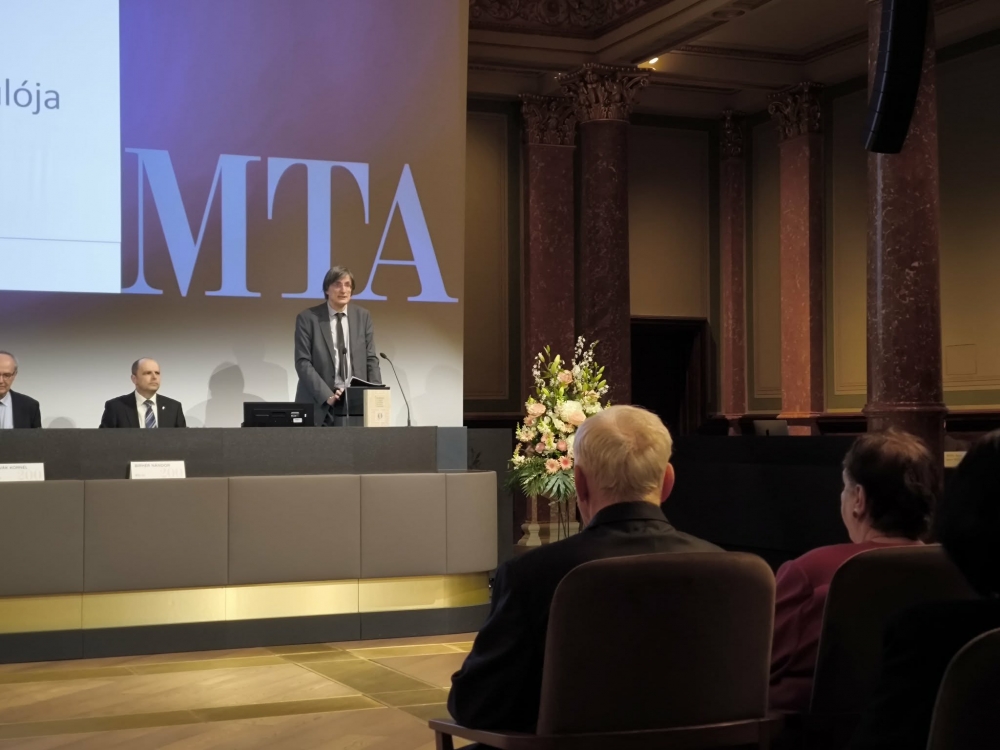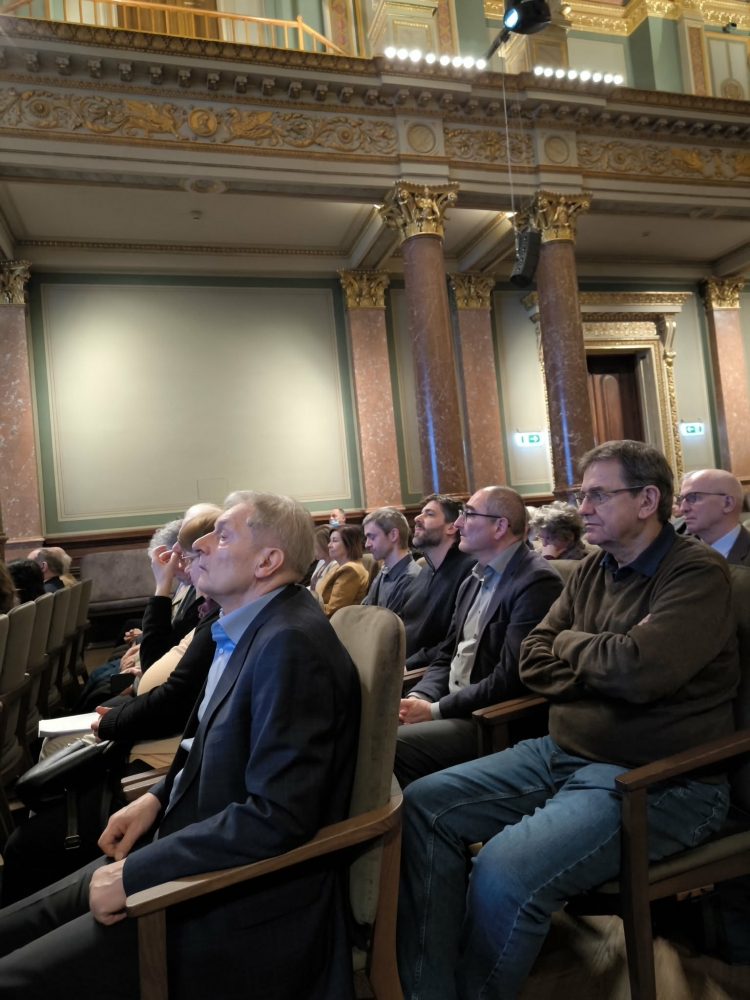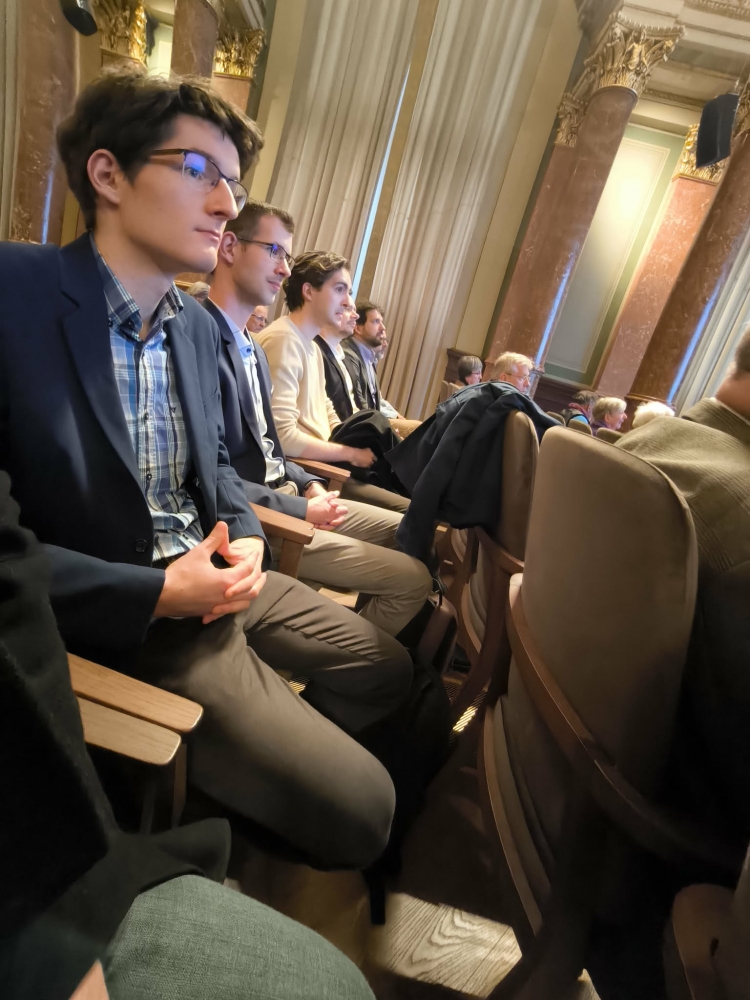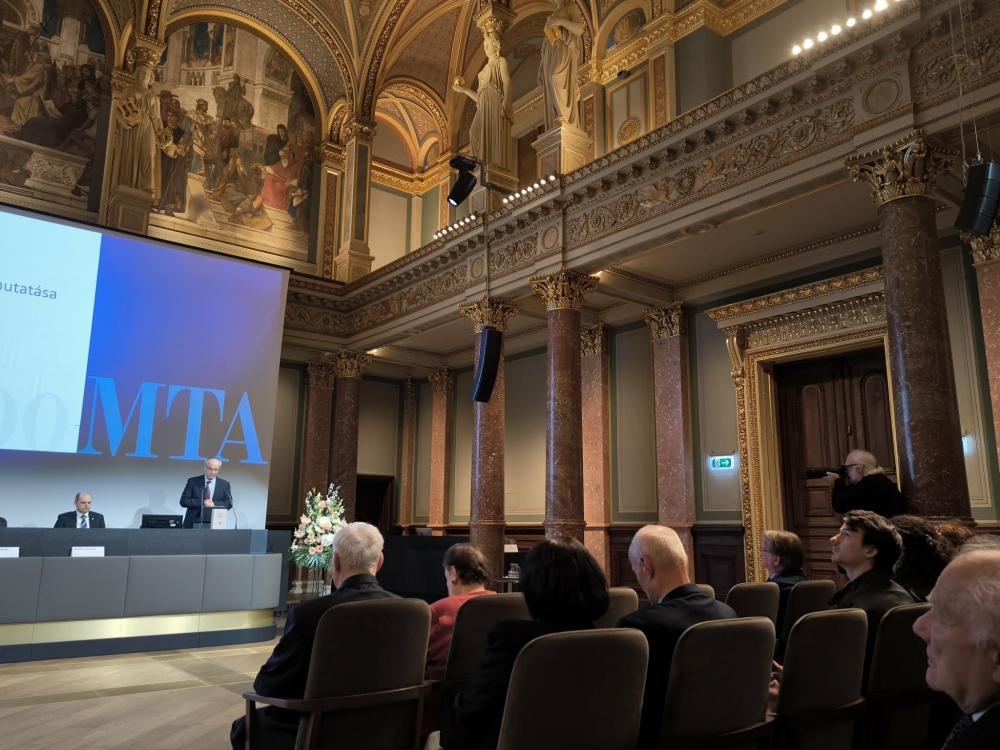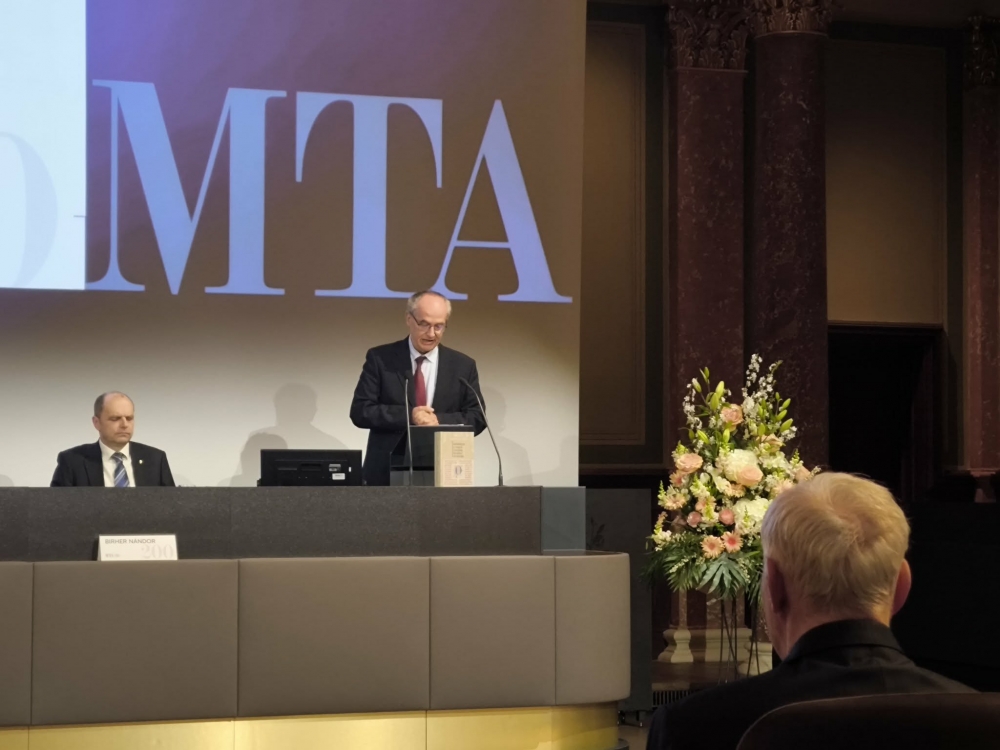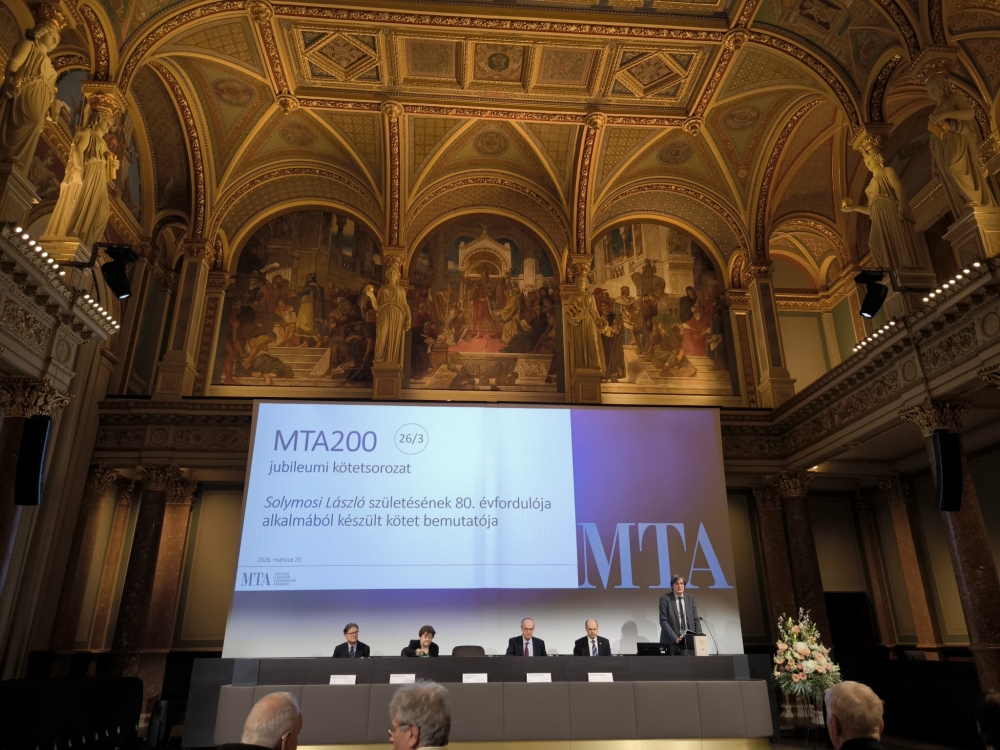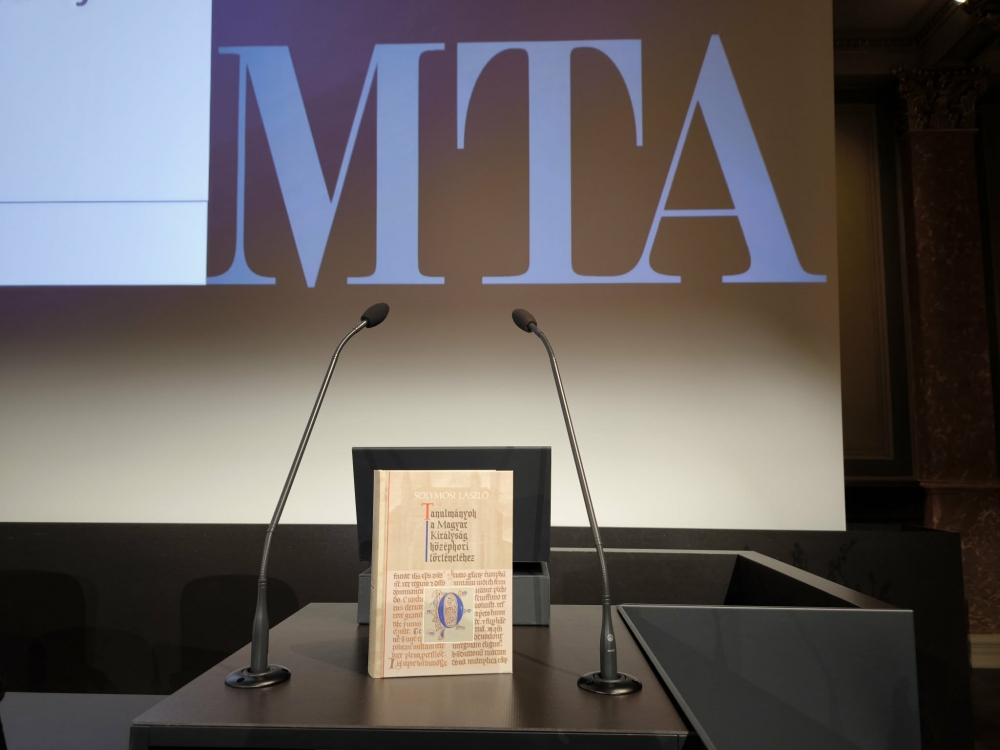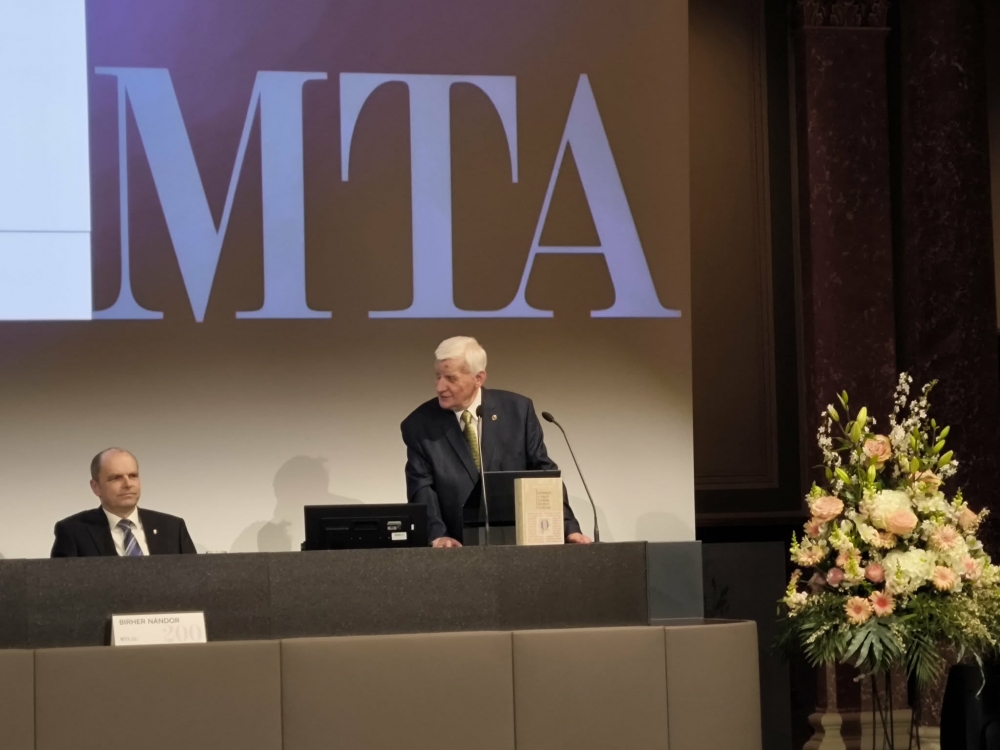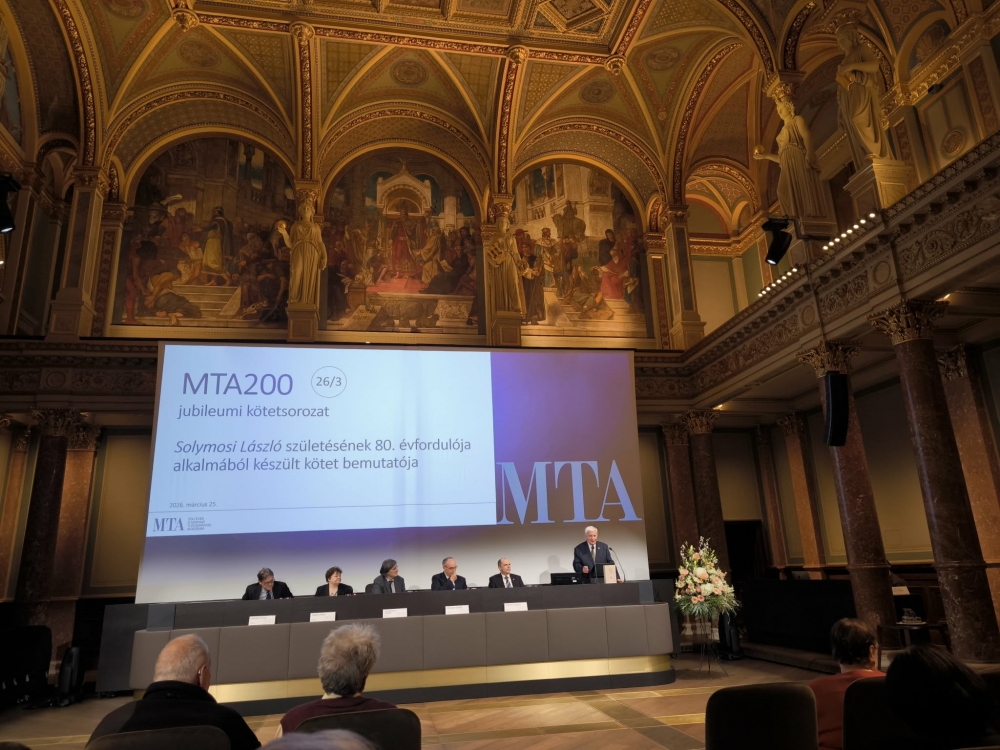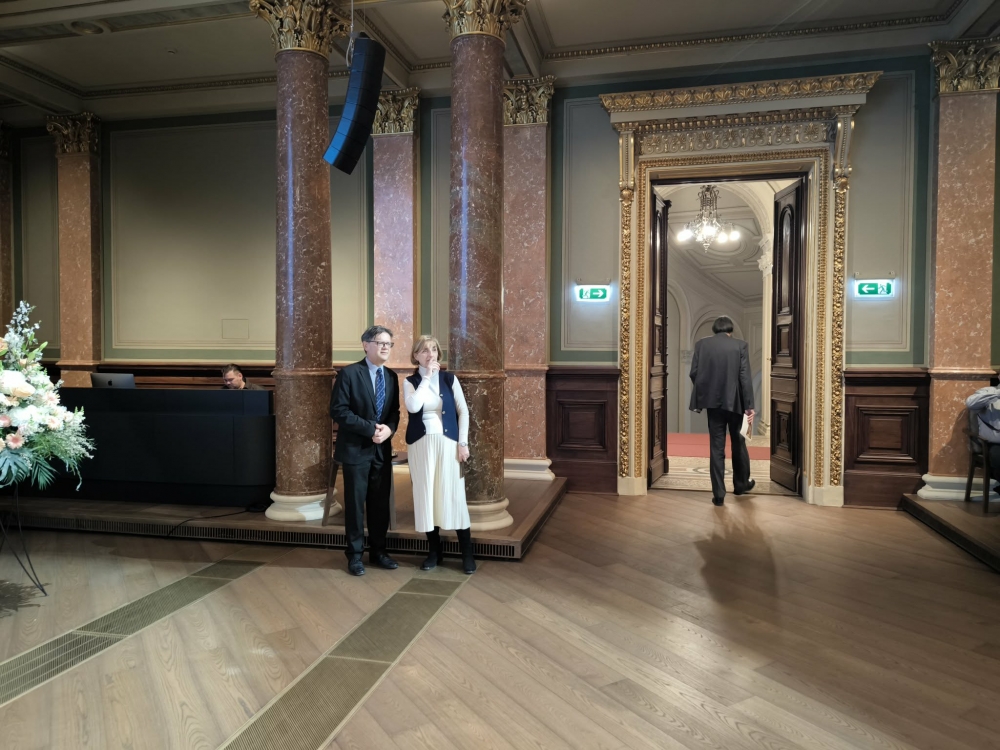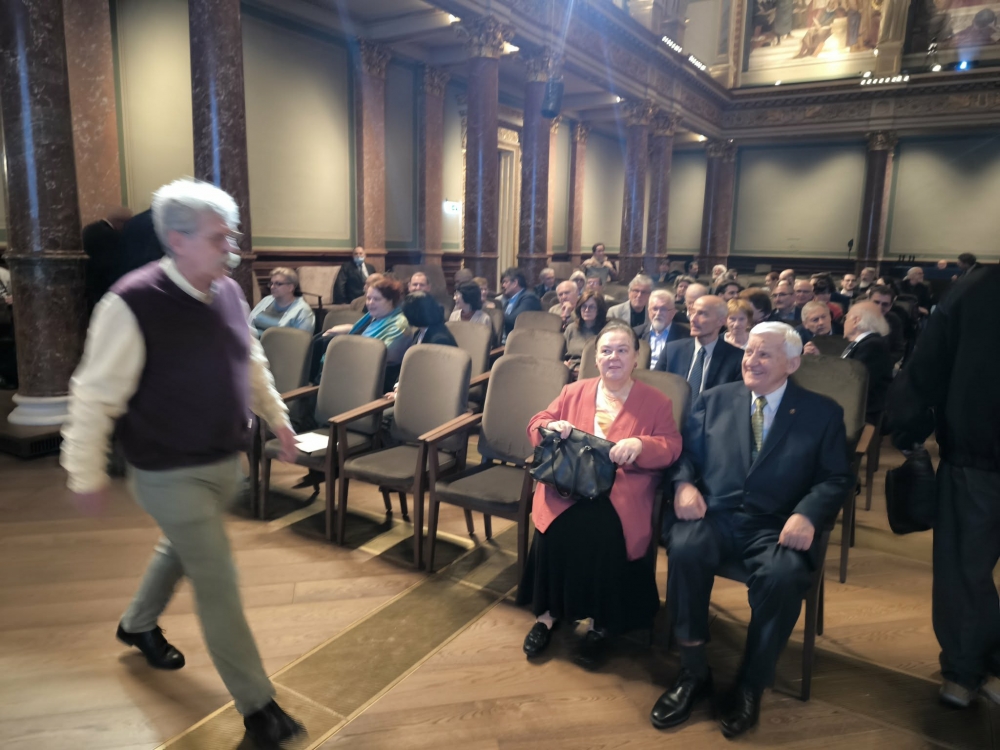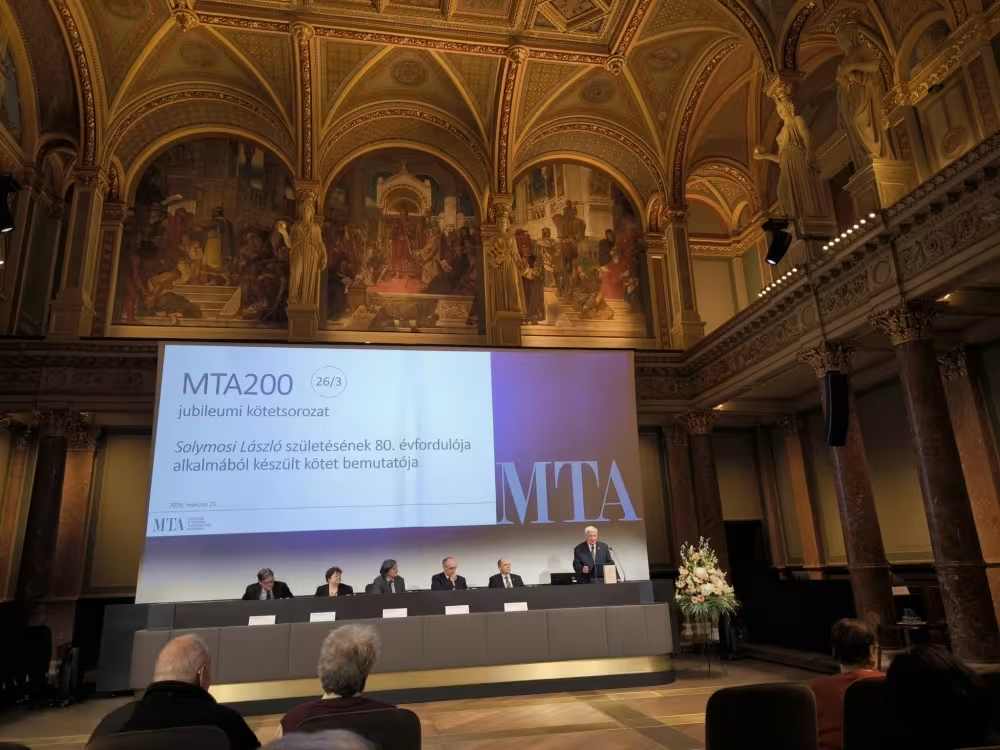
On 25 March 2026, the ceremonial hall of the Hungarian Academy of Sciences hosted the presentation of the festschrift inspired by the eightieth birthday of Professor László Solymosi, Member of the Academy. (László Solymosi: Studies on the Medieval History of the Kingdom of Hungary, ed. Attila Bárány, Gábor Dreska, László Szabolcs Gulyás, Ádám Novák, and Kornél Szovák, Hungary in Medieval Europe Research Group, University of Debrecen, Debrecen–Budapest, 2025.)
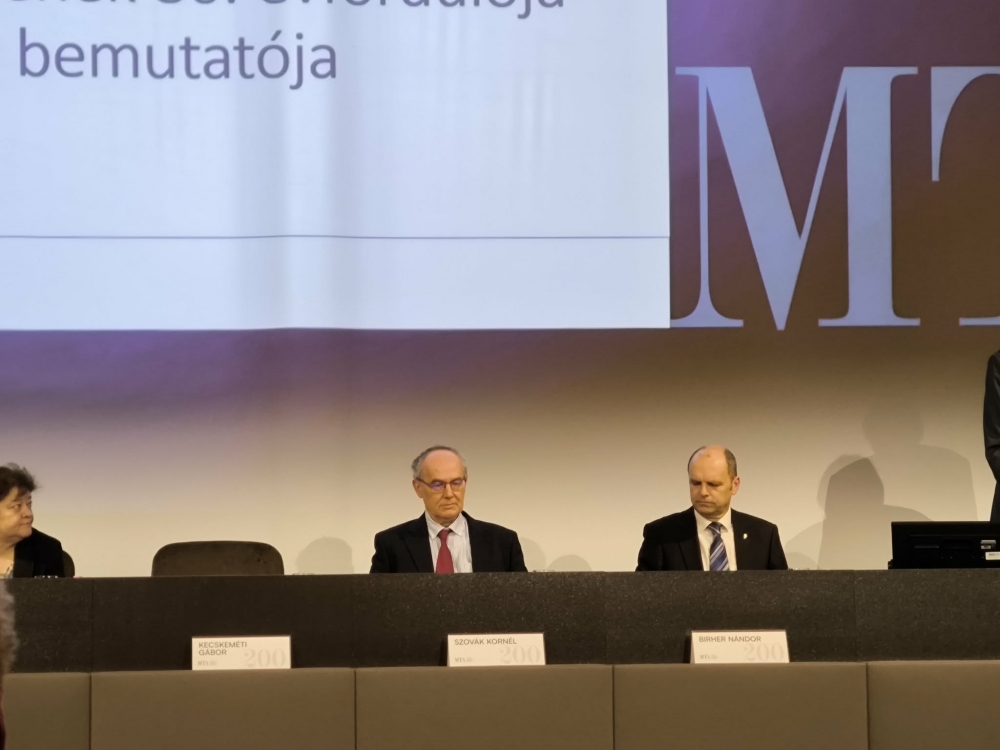
The large audience of colleagues, including members of Section II of the Academy, former students, admirers, and friends was welcomed on behalf of the bicentenary Hungarian Academy of Sciences by Gábor Kecskeméti. He was followed by Kornél Szovák—former student of the celebrant, Director of the Gyula Moravcsik Institute and the Collegium Professorum Hungarorum, and Professor at the Faculty of Humanities and Social Sciences of Pázmány Péter Catholic University—who presented the volume (his address may be read here). He emphasised that while László Solymosi’s scholarly legacy includes several source editions, a monograph, and a chronology, it is above all his studies that render his academic oeuvre truly distinctive. The newly published volume offers a rich selection of these writings, providing an excellent representation of both the celebrant’s principal fields of research and the trajectory of his scholarly career. The central focus of the collection, much like that of Solymosi’s life’s work itself, is the ecclesiastical history of medieval Hungary.
Kornél Szovák also drew attention to the physical appearance of the volume, noting that its design consciously harmonises with the collection published in honour of Professor Solymosi’s seventieth birthday in 2014. He pointed out that the studies, arranged in six thematic sections, encompass almost the entire medieval period, from the Árpádian era to the age of the Jagiellonians. He stressed that every contribution is characterised by meticulous scholarship, an abundance of source material, and methodological maturity. Alongside the many stimulating studies devoted to the Diocese of Veszprém and to Saint Ladislaus, he singled out as personal favourites two essays dealing respectively with the foreign journeys of Abbot Uros of Pannonhalma and the pilgrimage of Hungarian prelates to England in the thirteenth century.
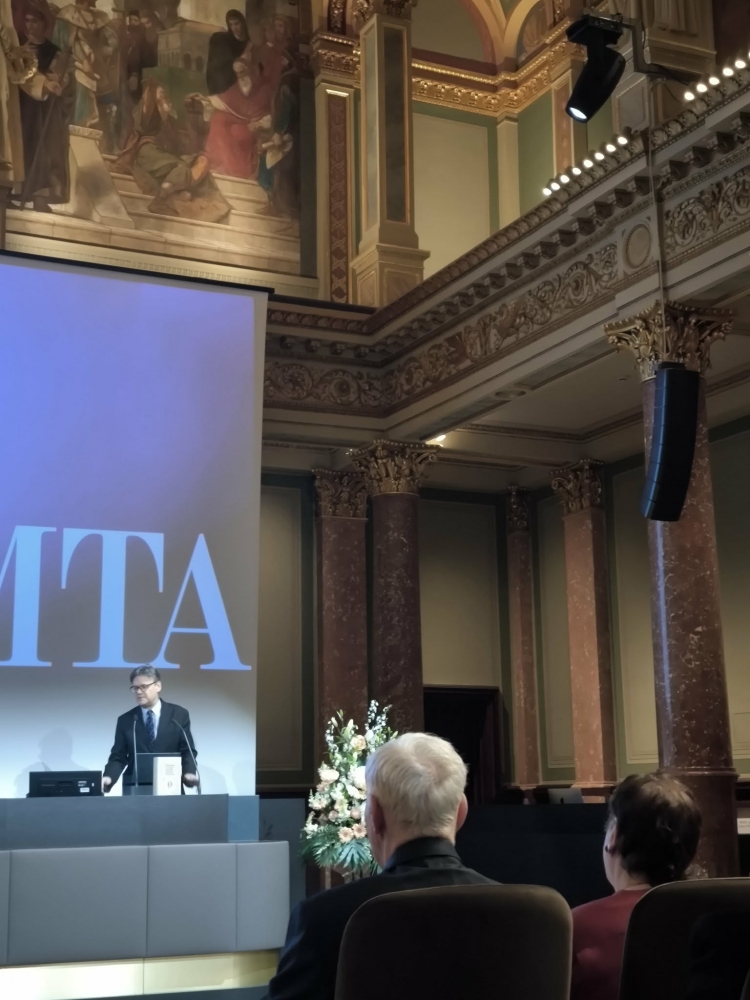
The celebrant, who attended the event together with his wife and daughter Katalin, was subsequently greeted on behalf of the three universities that had supported the publication of the volume. The first speaker was Ildikó Horn, Director of the Institute of History at the Faculty of Humanities of Eötvös Loránd University. She recalled the academician’s professional and personal ties to ELTE, from his years as a student through his career as lecturer and department chair, and placed him among the ranks of the great medieval historians and mentors who preceded him, including Henrik Marczali, Elemér Mályusz, József Deér, András Kubinyi, and Ilona Bolla.
On behalf of the Faculty of Humanities and Social Sciences of Pázmány Péter Catholic University, Dean Nándor Birher praised (his address may be read here) the academician’s achievements. He highlighted the particularly important role Solymosi played during the 1990s in developing the medieval studies curriculum of the Faculty, first during its formative years on Ménesi Road and subsequently in Piliscsaba. As a result of these efforts, the Faculty produced its first Doctors of the Hungarian Academy of Sciences in the field of medieval studies, among them Norbert C. Tóth and Tibor Neumann. Beyond his teaching activities, Professor Solymosi consistently supported historical scholarship at Pázmány, a commitment reflected, among other achievements, in the long series of Vatican, international, and domestic publications produced by the Fraknói Research Group. Dean Birher also recalled a conversation in which the celebrant had stressed the importance of strengthening both the Catholic character of historical scholarship and the teaching and research of ecclesiastical history at a Catholic university. The Dean expressed his agreement with these aims and reaffirmed his commitment to their further promotion.
Finally, Attila Bárány, Professor at the University of Debrecen and the principal organiser of the volume, addressed the audience on behalf of his institution. He reminded those present that László Solymosi, born in 1944, remains an active scholar to this day, continuing to contribute to the university’s academic life through both his publications and his supervision of doctoral students. He shared with the audience that the idea for the volume had originated during the anniversary year of 2024 and had now come to fruition. At the same time, he expressed the hope that the studies omitted from the present collection, together with future contributions, might form the basis of another commemorative volume to be presented on 25 June 2034, on the occasion of the celebrant’s ninetieth birthday. His remarks were met with enthusiastic applause from the audience.
At the conclusion of the presentations, Professor Solymosi himself stepped to the podium of the ceremonial hall and shared memories of several defining moments from his academic and institutional career, while also reflecting upon the speeches delivered during the event.
The programme concluded with a reception and book-signing session. The Fraknói Research Group was represented at the event by members of staff from the Collegium Professorum Hungarorum.
Professor Solymosi, who has also been honoured with the Vilmos Fraknói Prize, has been a member of the editorial board of the Collectanea Vaticana Hungariae series since its establishment in 2002 under the chairmanship of Péter Erdő, then Rector of Pázmány Péter Catholic University. From the very beginning, he has been a regular participant and contributor to the events organised by the Fraknói Research Group, both in Budapest and, most recently, during the Fraknói Centenary celebrations held in Nagyvárad (Oradea) and Rome in 2024 (see: here, here, here, here and here). He is also the dedicatee of Volumes I/9–10 of the Collectanea Vaticana Hungariae series, the Cameralia volumes published on the occasion of his seventieth birthday.
Ad multos annos!