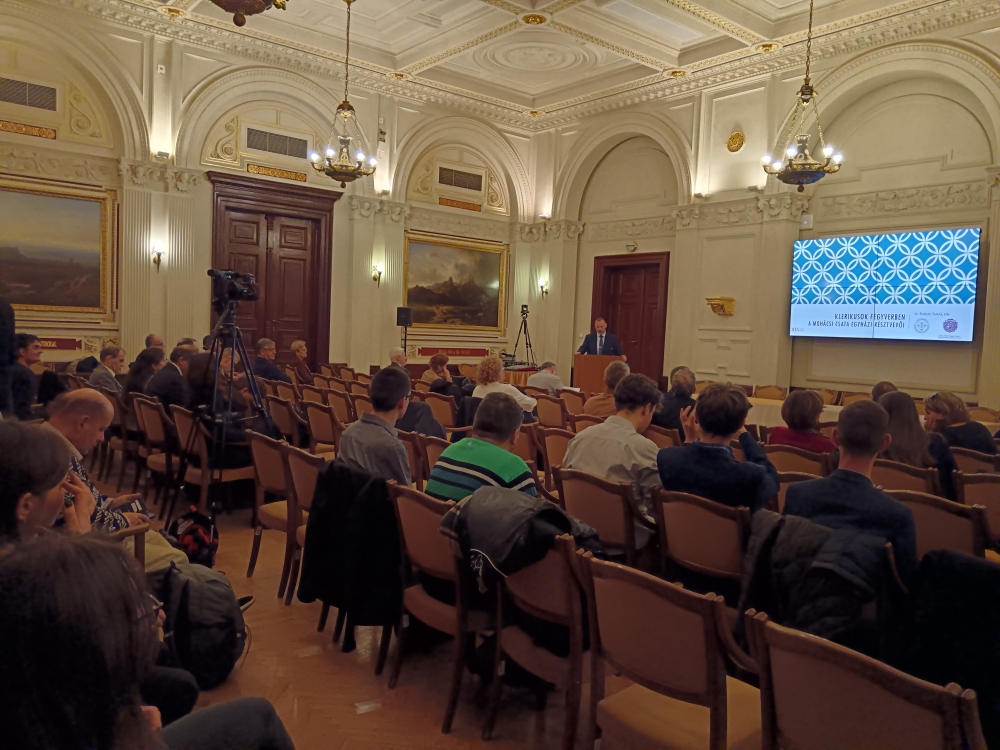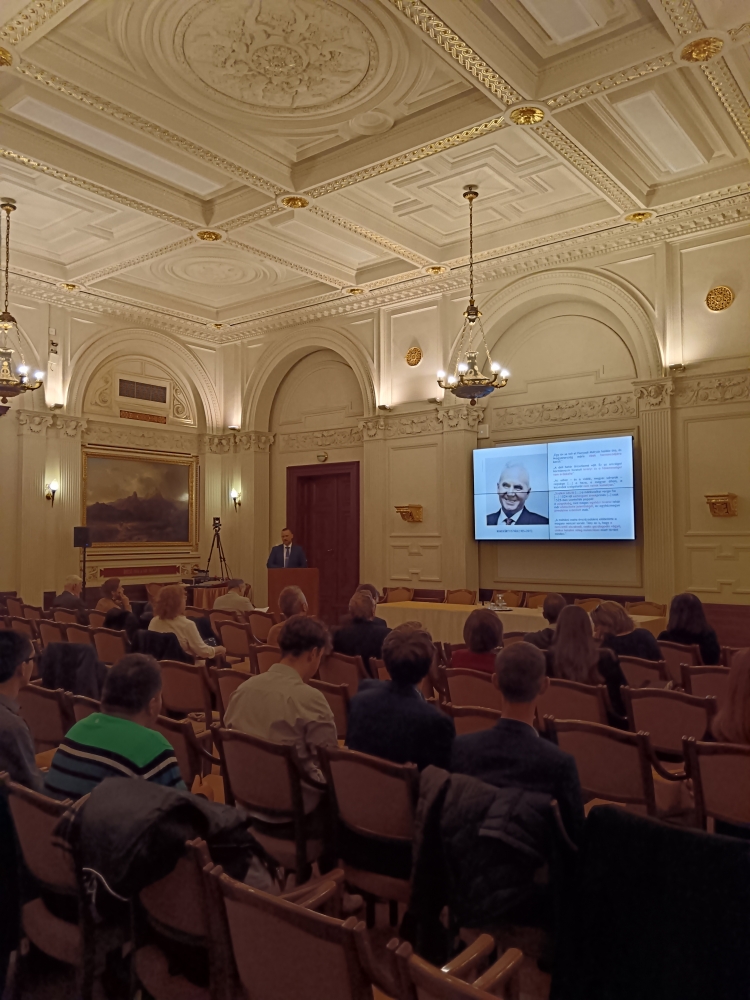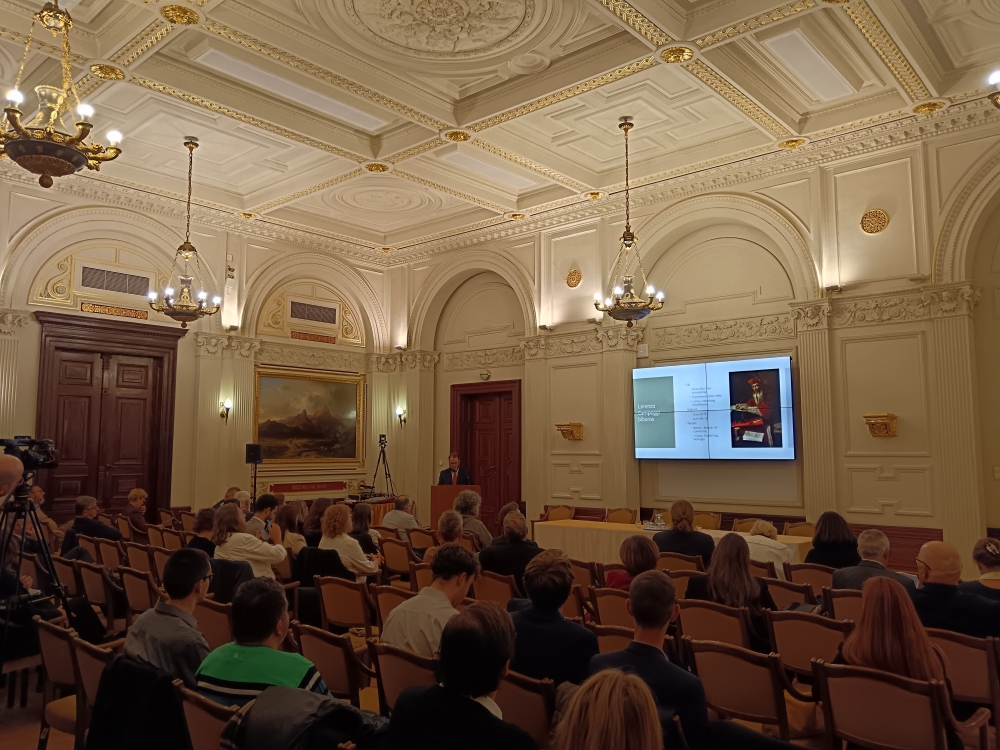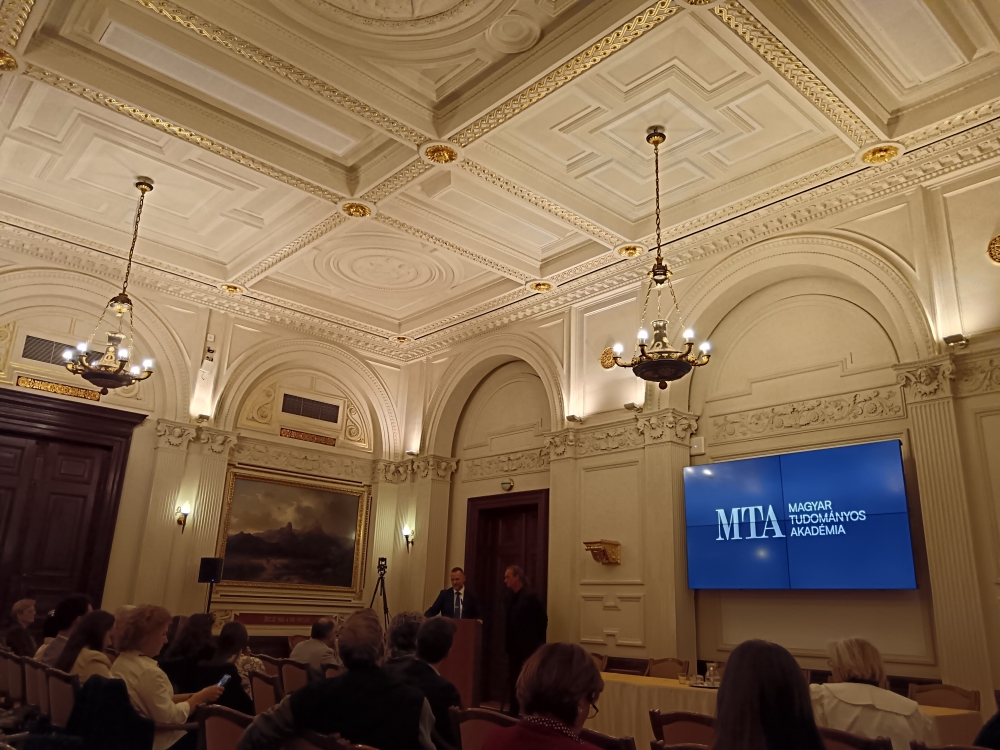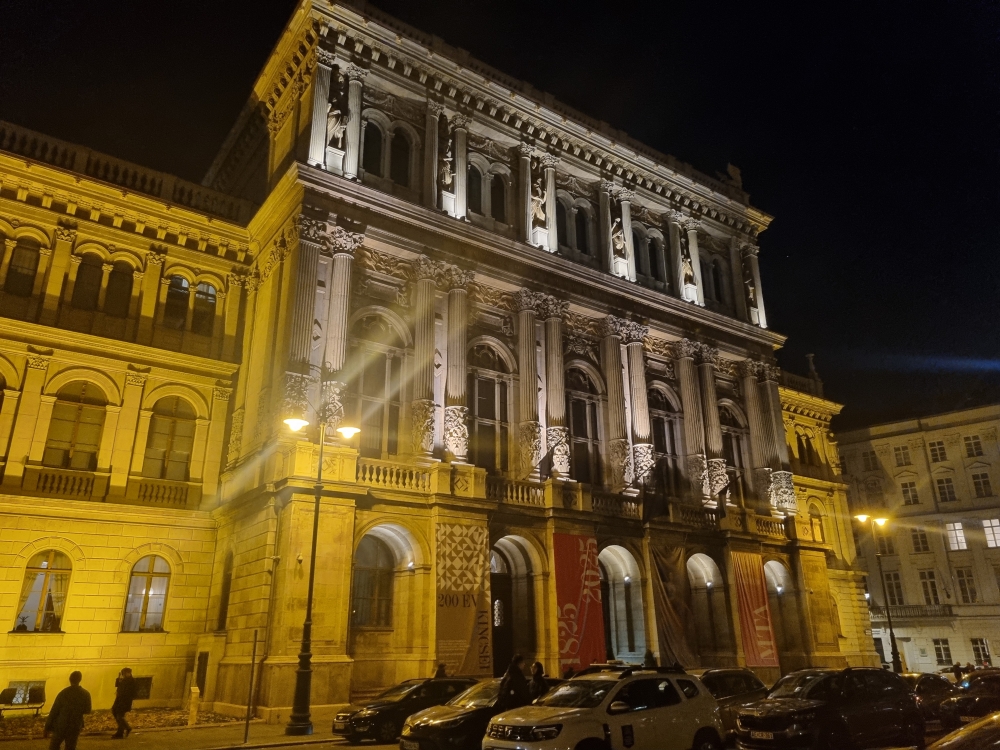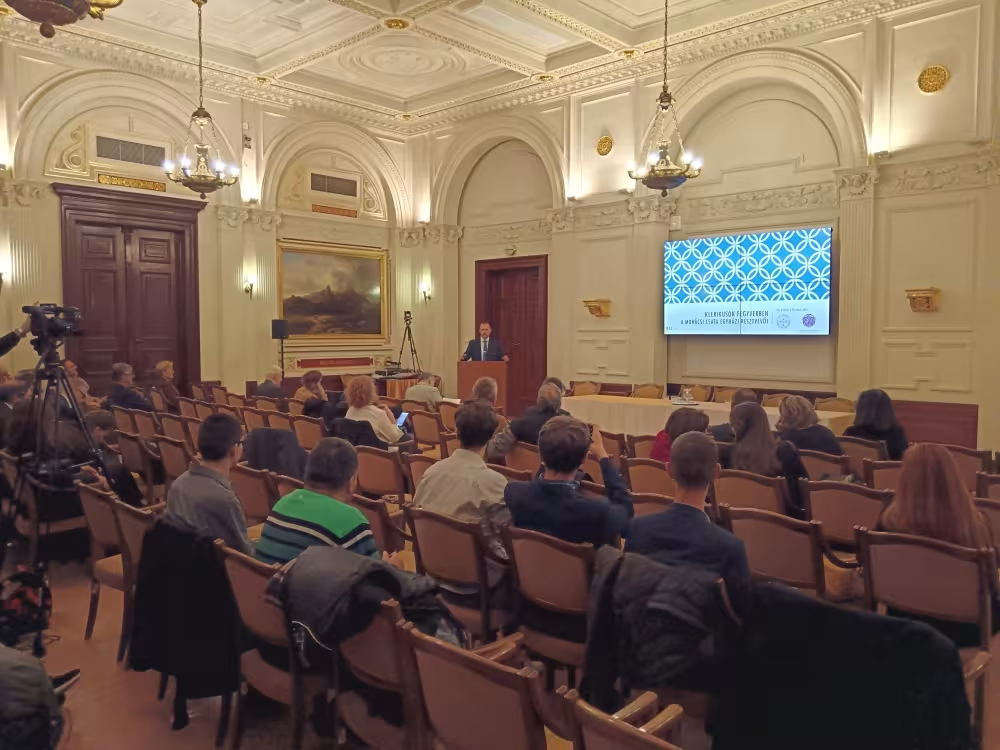
On 7 November 2025, the Hungarian Academy of Sciences (HAS) held a major conference at its headquarters in Budapest entitled
“HAS 200 – Mohács 500. The Latest Research Results in Archaeology, Anthropology, and Historical Studies.” The event, organized in the bicentenary year of the Academy’s foundation by the Pécs and Szeged Regional Committees of the HAS, brought together scholars from across Hungary.
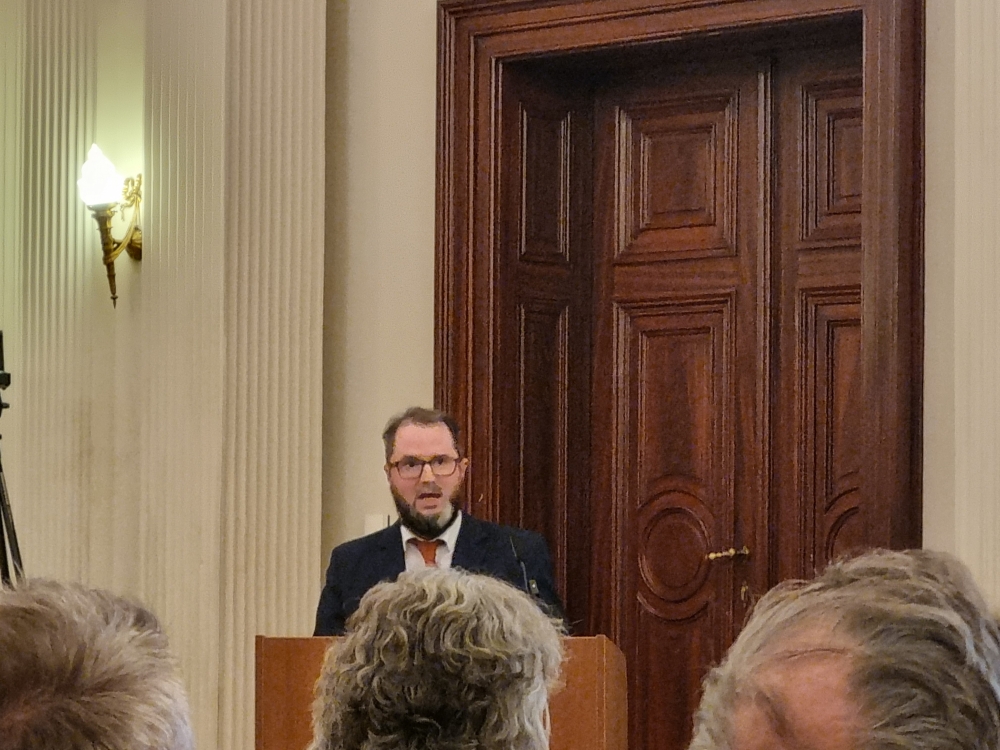
The Fraknói Research Group was represented by Tamás Fedeles, who also took part in the organization of the event, as well as by Tamás Kruppa and Gábor Nemes, both of whom delivered lectures in the historical section chaired by Academician László Solymosi. Tamás Fedeles presented a paper entitled Clerics in Arms: The Ecclesiastical Participants of the Battle of Mohács. In his lecture, refuting the earlier views of István Nemeskürty, he demonstrated how many Hungarian prelates and other clerics took part in the battle and which of them perished. He also discussed the lists of casualties circulated throughout Europe in the months following the battle and emphasized the significant role played on the battlefield not only by individual churchmen but also by the ecclesiastical contingents (banderia) recruited by bishops and major cathedral chapters.
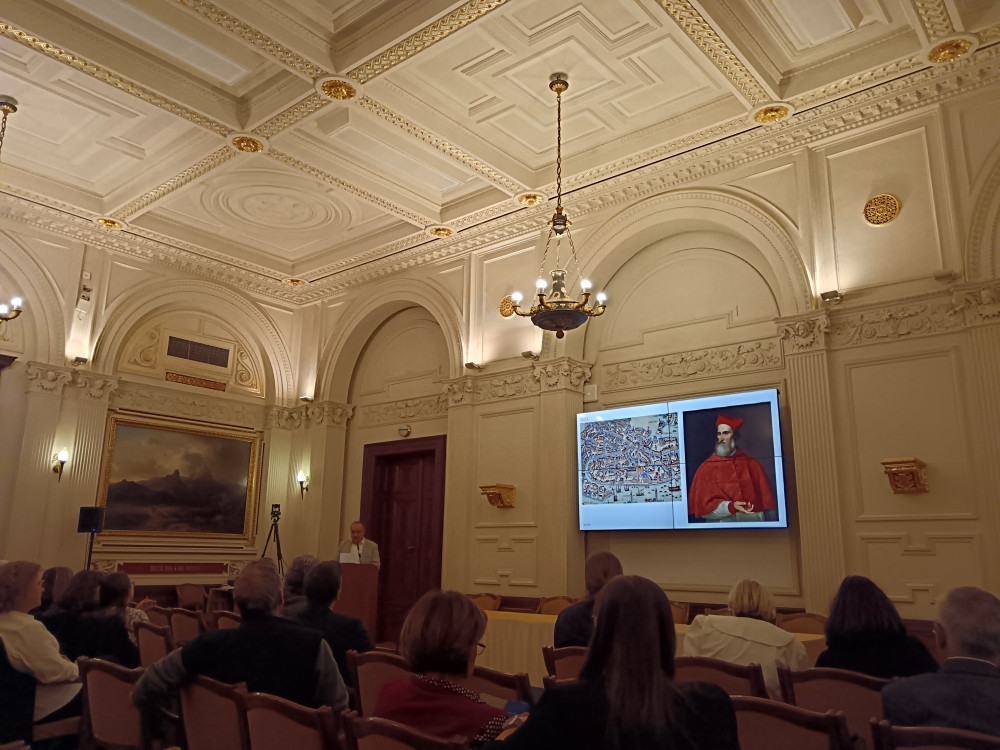
Gábor Nemes, in his presentation Papal Envoys in Hungary (1523–1526), focused on the legation of Cardinal Lorenzo Campeggi, who acted as papal legate from February 1524 to October 1525. His analysis drew heavily on previously unknown archival sources discovered in the Malvezzi Campeggi Archives preserved in the Archivio di Stato di Bologna. Cardinal Campeggi, after participating in the Imperial Diet of Nuremberg and the Regensburg Conference, arrived in Vienna at the invitation of Archduke Ferdinand, where King Louis II had already established contact with him in August 1524.
He reached Buda in December 1524 and remained there until June 1525, working on the coordination of anti-Ottoman preparations, the union of Bohemian Catholics and Utraquists, and the ratification of the truce between the Kingdom of Poland and the Teutonic Order. During his mission, nearly 450 petitions were submitted to his legatine tribunal, about one-third of them in Buda. Of the seventy petitions concerning Hungary, most were submitted by members of the lower clergy. The legate’s entourage consisted mainly of northern Italian clerics, many of whom possessed humanist education and extensive intellectual networks. Although Cardinal Campeggi was one of the Apostolic See’s most capable diplomats, by his own assessment his legation achieved limited success in resolving the issues entrusted to him.
Tamás Kruppa gave a lecture entitled The Echo of the Battle of Mohács in Italian Sources. His presentation examined the Italian reception of the Battle of Mohács and its aftermath based on Venetian and Vatican documents. The Kingdom of Hungary was struck by the Ottoman attack in a state of diplomatic isolation, as Europe at the time was absorbed in the Habsburg–Valois rivalry and the Italian Wars. Venetian and papal diplomatic reports provide a detailed picture of the political divisions and military weakness of contemporary Hungary. The interpretation of the battle in Italian historiography—especially in the works of Paolo Giovio and his contemporaries—crystallized in the decades following 1526, portraying the disaster as a cautionary example for Italian readers. Thus, the tragedy of Mohács became not only a Hungarian national catastrophe but also an event of European significance, deeply embedded in sixteenth-century Italian historical thought.