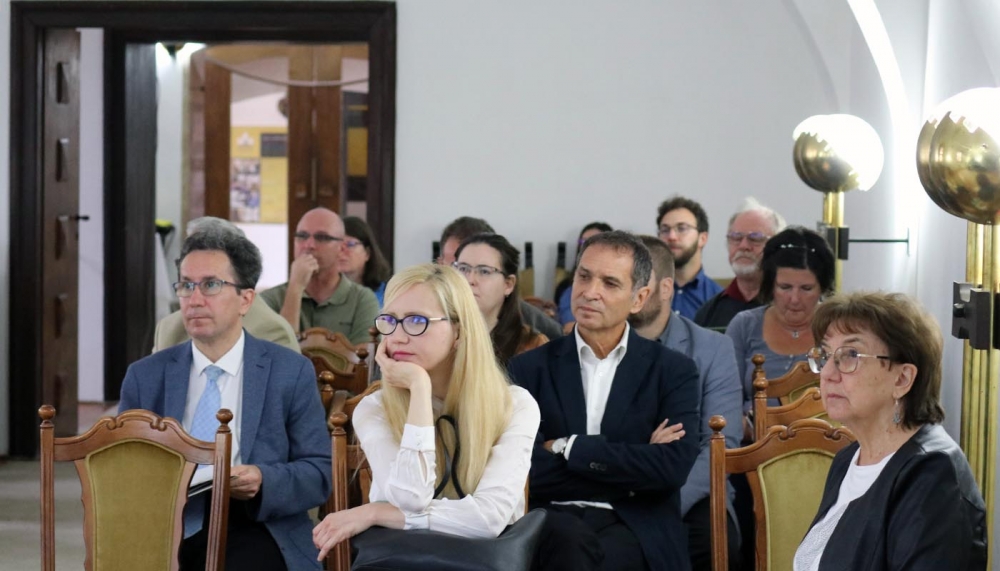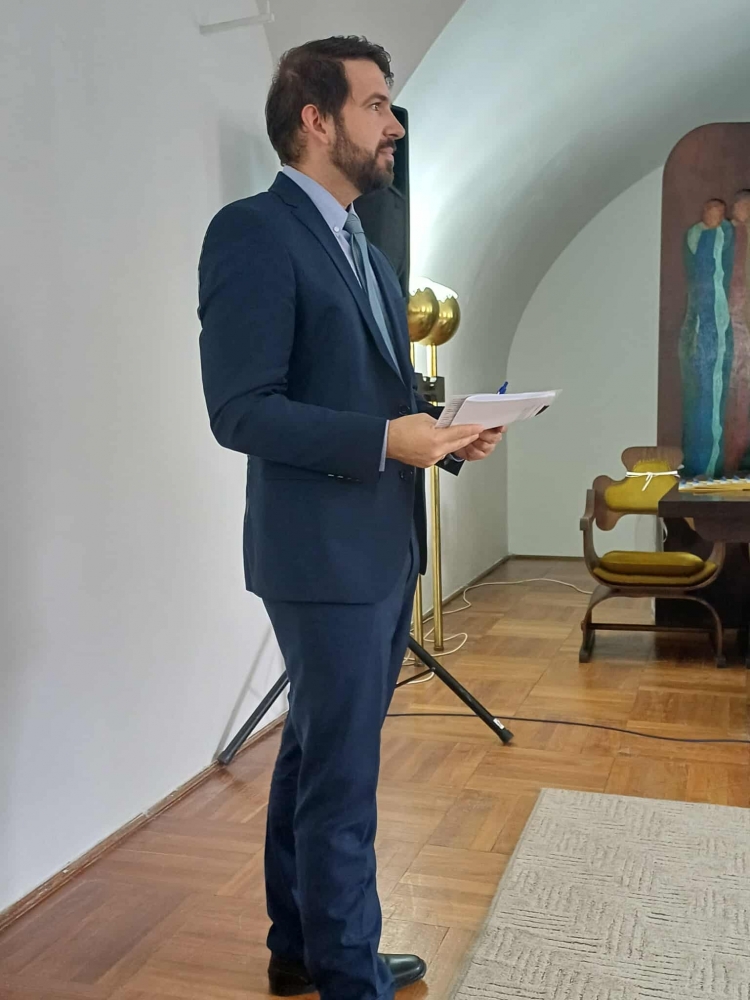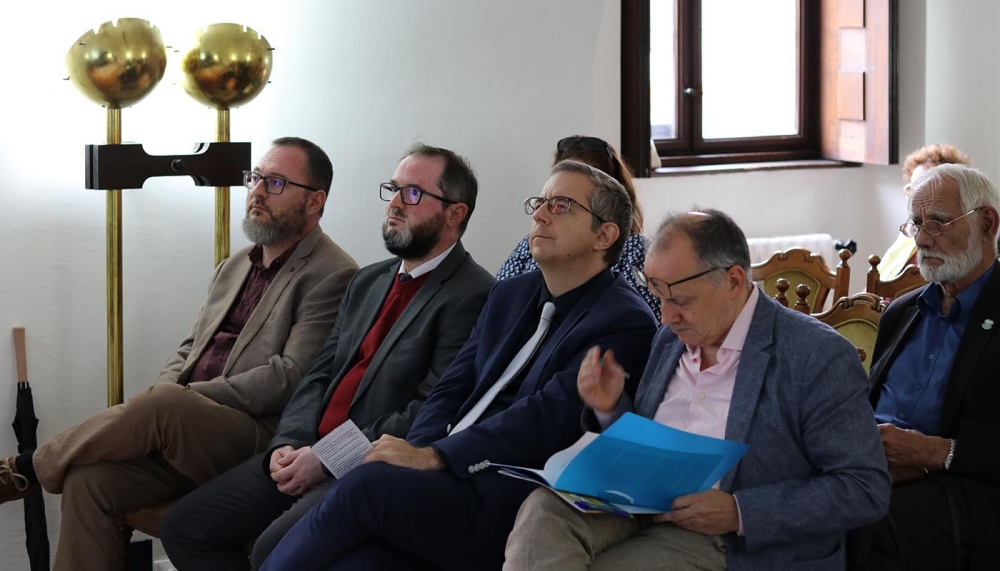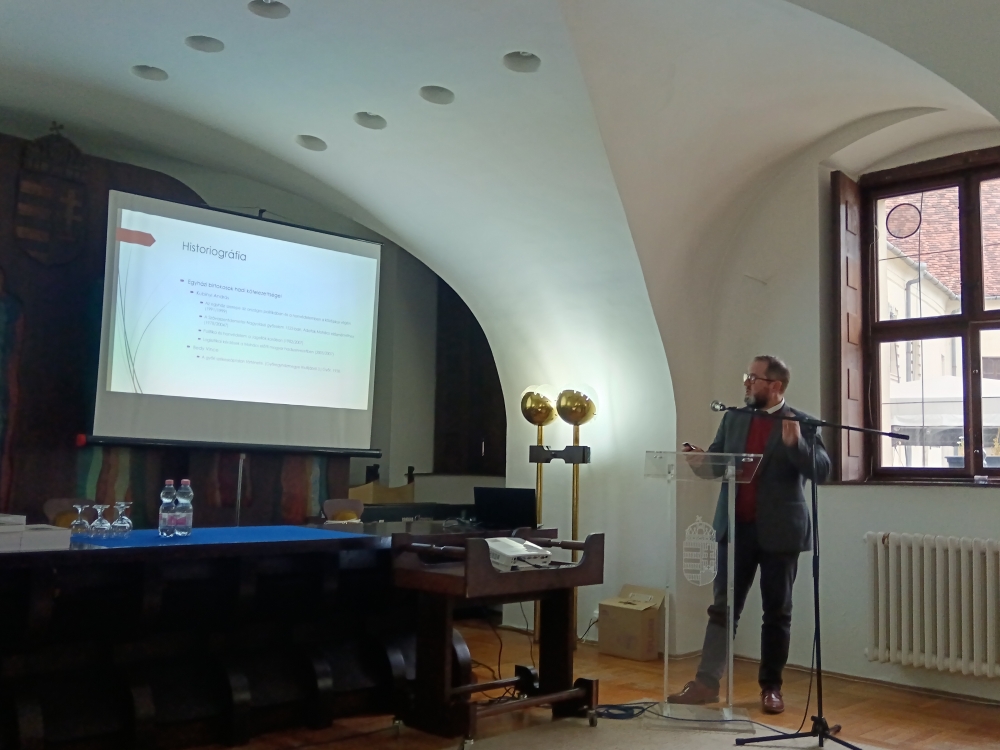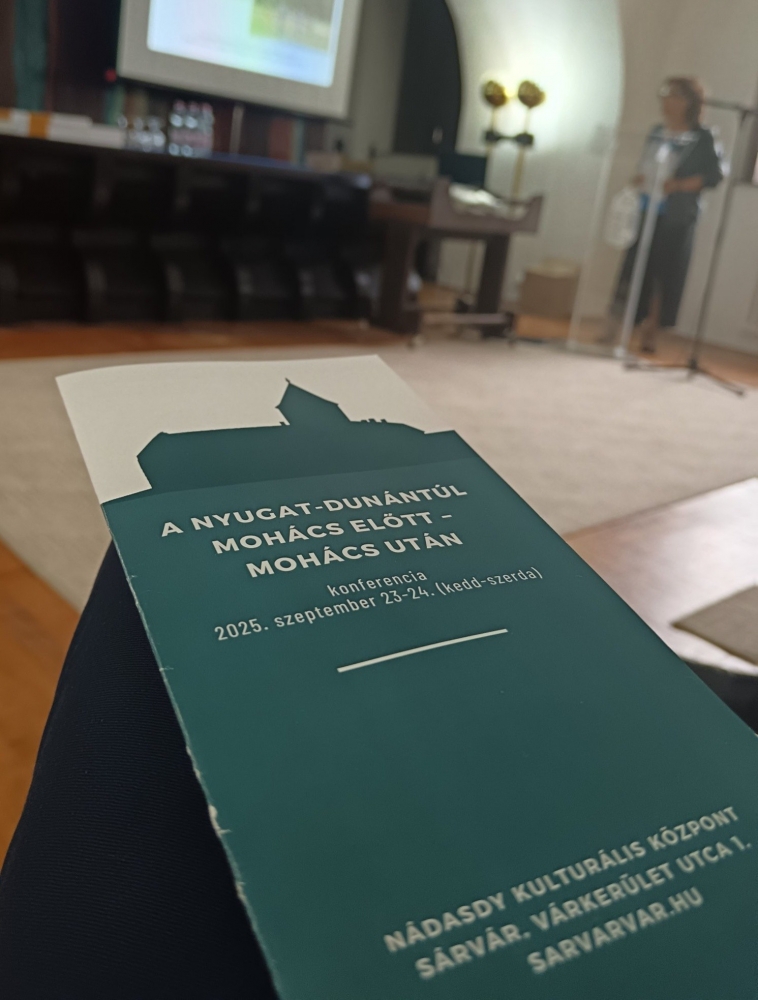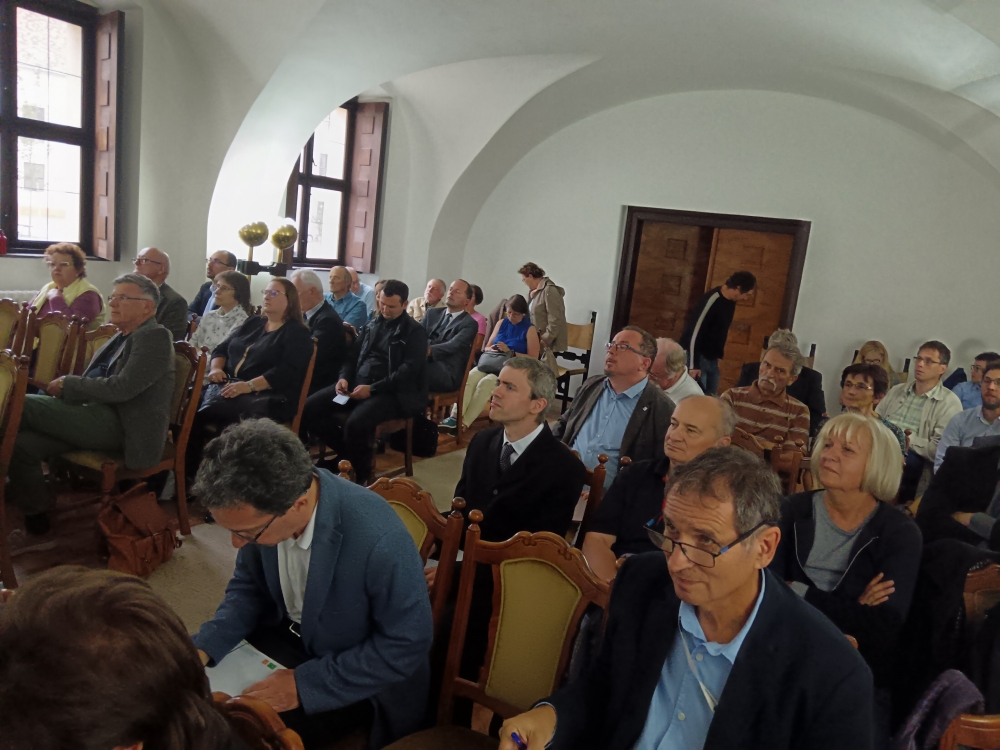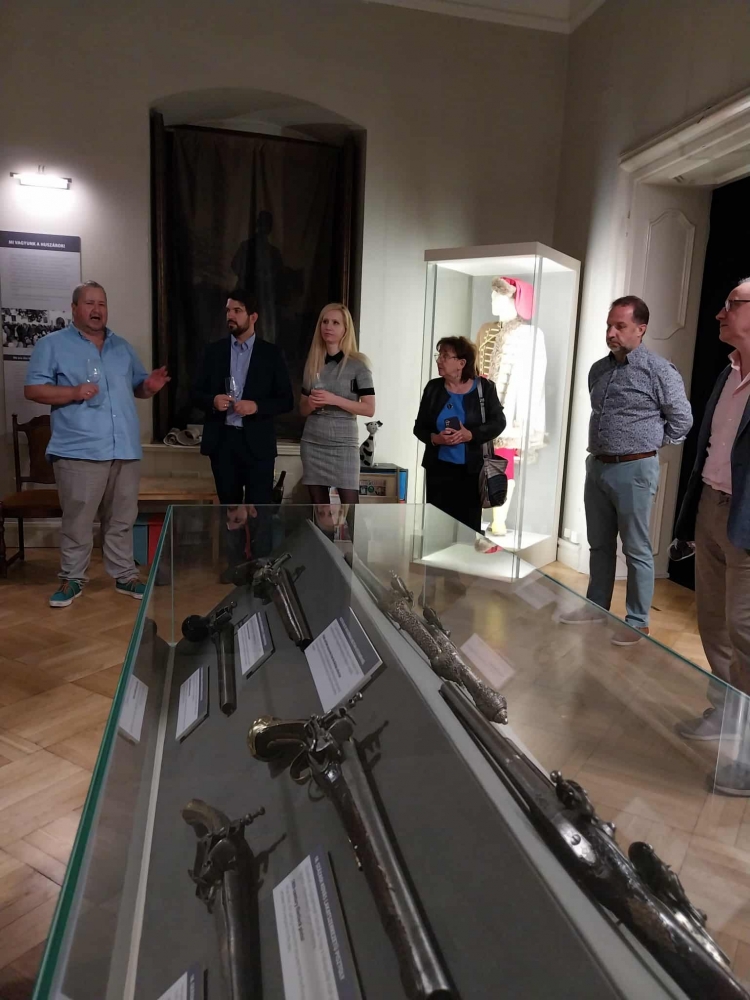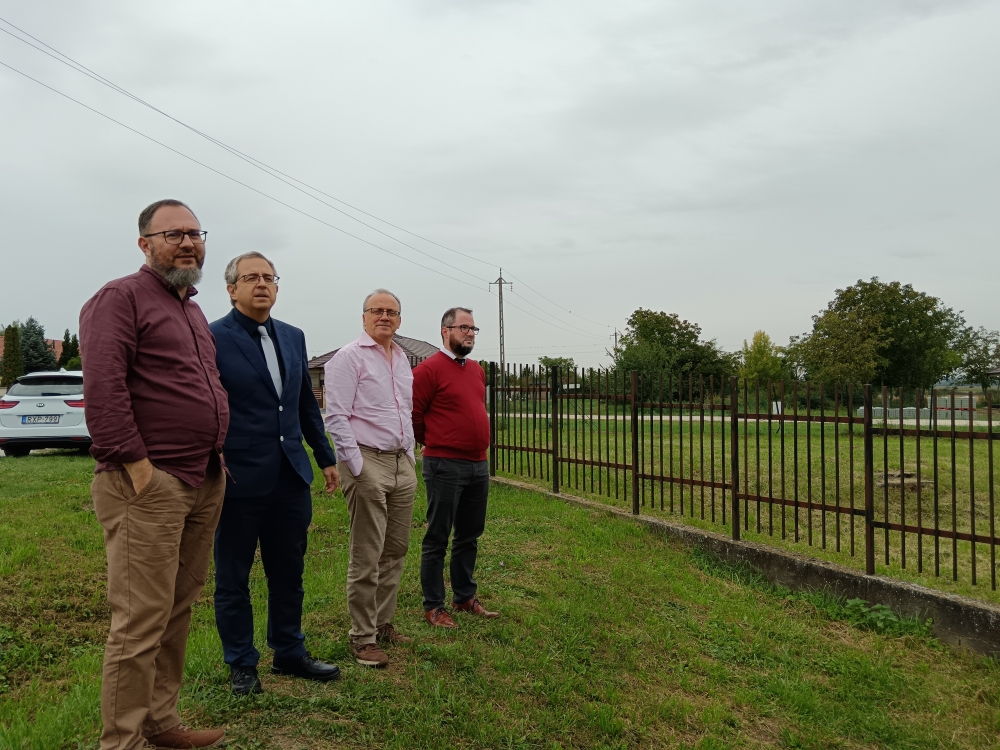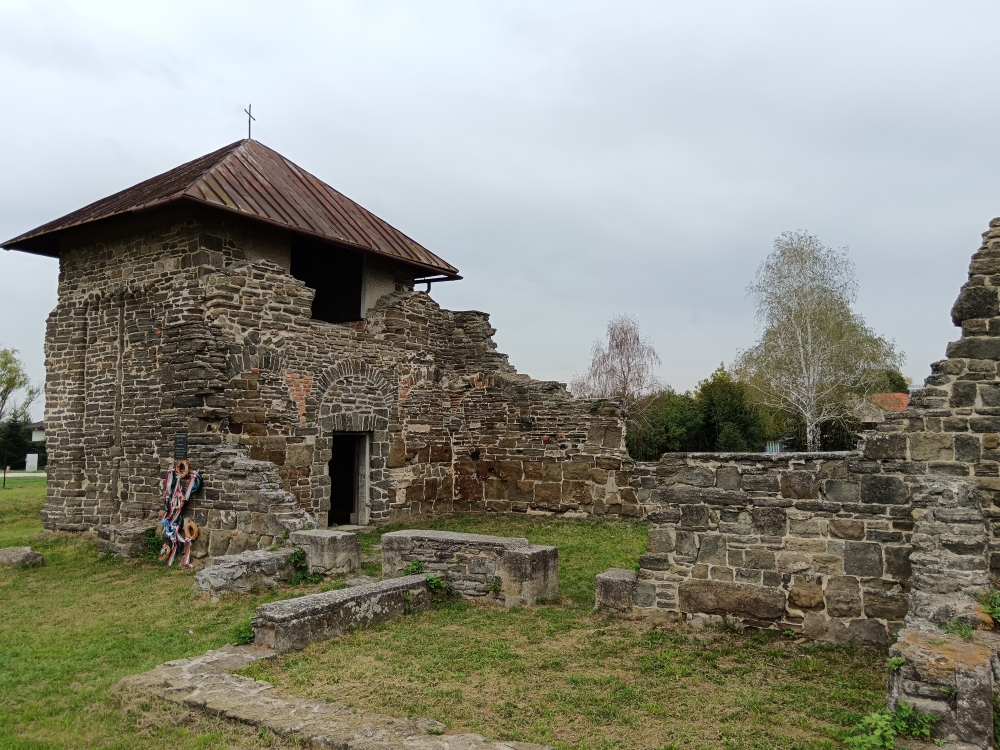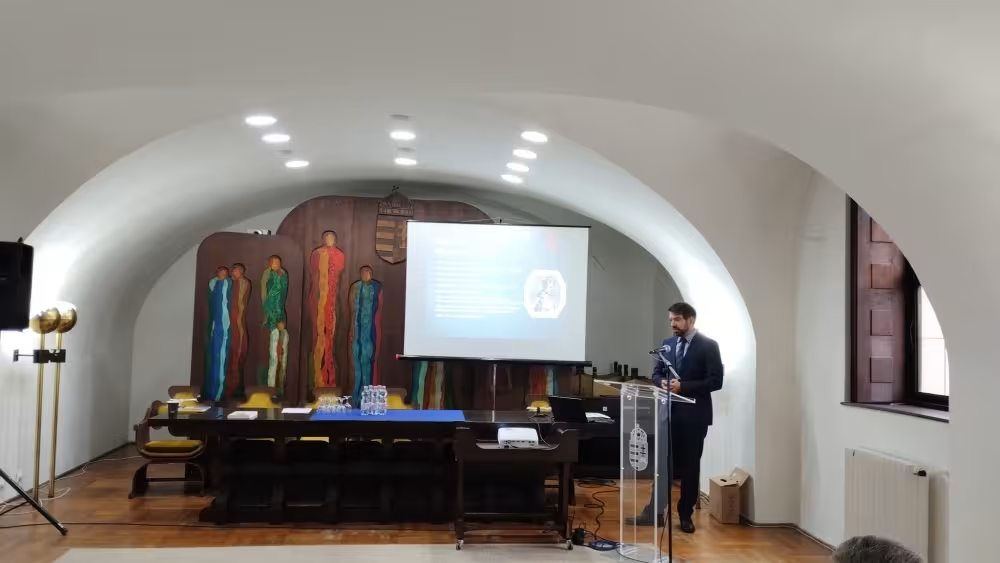
On 23–24 September 2025, the conference Western Transdanubia Before and After Mohács took place at the Nádasdy Cultural Centre in Sárvár. From the Fraknói Research Group, Viktor Kanász participated in the organisation; in addition to him, the large audience could listen to papers by Tamás Fedeles, Gábor Nemes, and Tamás Kruppa.
In the first session, chaired by Viktor Kanász, Gábor Nemes presented the military expenditures of the Cathedral Chapter of Győr between 1500 and 1526, based on data from the chapter’s medieval account books. He established that although the Győr chapter was not among the landowners obliged by Act XX of 1498 to maintain a military contingent (bandérium), from 1502 onwards the presence of mercenaries can be documented. Among these mercenaries were both cavalry (heavy and light) and infantry soldiers, each with their own captain and flag. The payment of wages and the provision of weapons, clothing, and food placed a heavy financial burden on the canons, who had to finance the costs of warfare not only through the war tax but also from their own revenues.
Tamás Kruppa delivered a paper entitled The Turkish Threat in Croatia and Slavonia Before Mohács: What Do the Venetian Sources Reveal? Based on texts from a previously unknown codex containing Venetian diplomatic reports, he demonstrated that in response to the outbreak of the Second Ottoman–Venetian War in 1499, the Republic of Venice concluded a triple anti-Ottoman alliance with the Kingdom of Hungary and the papacy in 1501. Within the framework of this league, the Kingdom mobilised its entire military force in the Hungarian–Ottoman border war of 1501–1502. The nearly year-long military operations were made possible by the regular arrival of Venetian and papal subsidies. In the end, due to the war itself, Venetian naval operations, and problems in Anatolia, the Ottoman side offered peace, which was concluded in 1503 and lasted for about seven years. The main strategic goal—weakening and pushing back Ottoman power—was not achieved. In addition to preserving the Banate of Jajca, the greatest achievement was a new treaty under which the Venetian Republic committed itself to pay an annual subsidy of 30,000 gold coins for Hungarian border defence for the duration of the seven-year peace. In practice, these payments continued regularly until 1521.
On the second day, Viktor Kanász gave a lecture entitled The Nuncio Would Return: Giovanni Antonio Burgio’s Mission to Hungary in 1527. He presented the nuncio’s activities, with special emphasis on his little-known attempt to return to Hungary in 1527, using several previously unknown Burgio letters preserved in the Vatican Apostolic Archive and the National Archives of Hungary. He also discussed the diplomatic mission of Tamás Kamarjai, sent by Ferenc Batthyány to Italy, during which he visited Venice and Rome and came into contact with Burgio. Kanász placed these events in the broader context of post-Mohács relations between the Holy See and Hungary.
In his lecture The Lord of Németújvár on the Southern Frontier, Tamás Fedeles focused on Lőrinc Újlaki, a former lord of Németújvár (today: Güssing, A) who actively participated in the defence of the southern borderlands. After presenting the prince’s military contingent (bandérium), he examined Újlaki’s first documented anti-Ottoman campaign in the early 1500s. He then discussed in detail his activities as co-Ban of Belgrade (1510–1513) and his participation in the military events of 1521–1523 Zvornik, Nándorfehérvár, Szávaszentdemeter (Zvornik, Belgrade, Sremska Mitrovica).
The written versions of the conference papers will be published in the spring of next year.